Why Your Colourful Plate Loses Most of Its Value in the Pan
Quick Answer: Colourful vegetables lose most of their vitamin C and folate to water and time, not heat alone. Boiling can cost 50 to 70 percent of water-soluble vitamins, largely because they leach into water you pour away. Steaming, microwaving and quick roasting retain far more. Meanwhile some nutrients — lycopene in tomatoes, beta-carotene in carrots — become more available with cooking, so the answer is method-specific, not simply raw versus cooked.
You bought the good peppers, the purple cabbage, the proper tomatoes.
Then you boiled everything for twelve minutes and poured the water down the sink.
Most of what you paid for went with it.
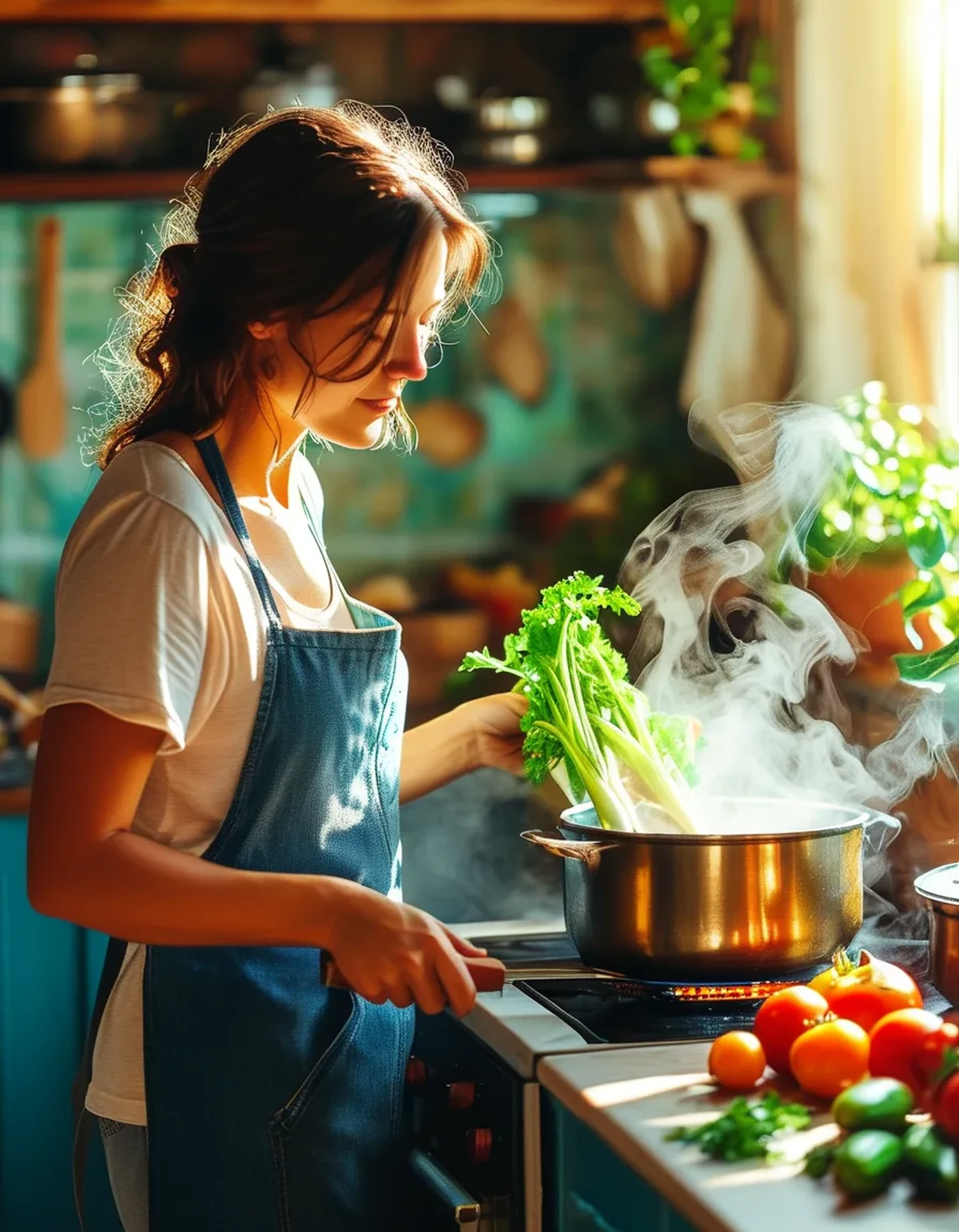
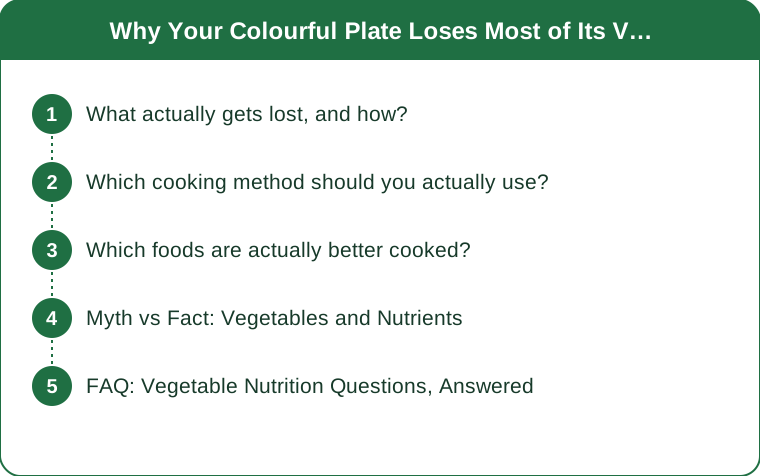
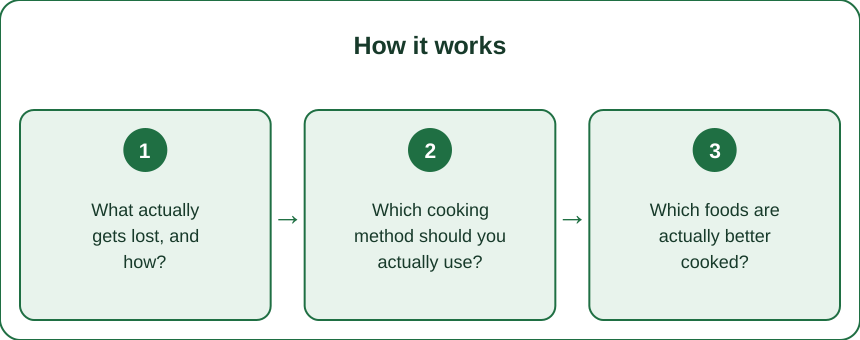
What actually gets lost, and how?
Three separate mechanisms, and only one of them is heat.
Leaching into water is the biggest single loss. Vitamin C, folate and B vitamins are water-soluble and move out of the vegetable into the cooking water. Boiling and draining is the highest-loss method there is.
Heat degradation is real but secondary. Vitamin C is genuinely heat-sensitive, but the time-and-water combination costs more than temperature alone.
Oxygen and time do quiet damage. Cut surfaces oxidise. A pepper sliced in the morning for an evening meal has lost meaningfully more vitamin C than one cut at the point of cooking.
Light matters too. Riboflavin degrades with light exposure, which is why clear-packaged produce under bright shop lighting is not ideal.
Surface area drives everything. Finely chopped vegetables lose far more than whole or halved ones. Cutting after cooking rather than before is a genuinely useful habit.
And storage costs more than people think. Spinach can lose a substantial share of its vitamin C within a week in the fridge. The vegetable that was ideal on Saturday is a different vegetable by Friday.
Which cooking method should you actually use?
Ranked by nutrient retention, with the practical caveats.
Steaming — the best all-round choice. No leaching, moderate temperature, short time. Retention of vitamin C is typically far higher than boiling.
Microwaving — surprisingly excellent. Short times and minimal added water make it one of the best methods for retention, despite its reputation.
Quick roasting at high heat. Some vitamin C loss, but no leaching, and it improves the availability of fat-soluble compounds while making vegetables taste good enough to eat regularly.
Stir-frying. Fast, minimal water, and the added fat improves absorption of carotenoids. Very good in practice.
Boiling — the worst, unless you use the water. If the liquid becomes soup or a sauce, the losses largely return to the plate.
Pressure cooking sits mid-table. Very short cooking times offset the higher temperature reasonably well.
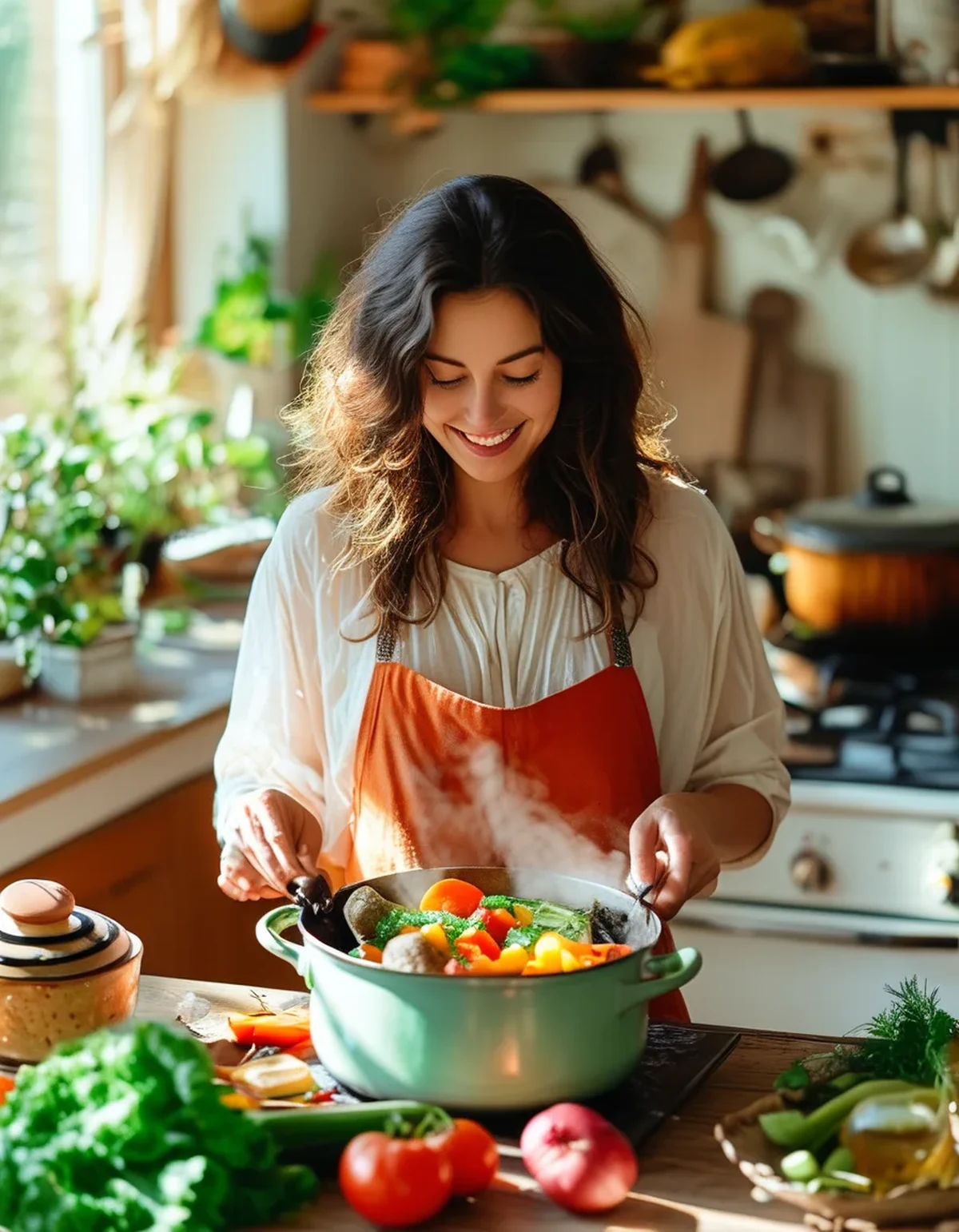
Which foods are actually better cooked?
This is where the raw-is-best assumption breaks down, and it does so consistently.
Tomatoes. Lycopene availability increases substantially with cooking, and further with added oil. Cooked tomatoes genuinely beat raw for this specific compound.
Carrots. Beta-carotene absorption improves markedly with cooking and fat. Raw carrot sticks look virtuous and deliver less.
Spinach. Cooking reduces oxalate content, improving calcium and iron availability, though it costs some vitamin C.
Mushrooms. Cooking breaks down chitin cell walls, improving access to nutrients, and some compounds are better tolerated cooked.
Cruciferous vegetables are the exception. Broccoli, kale and cabbage lose sulforaphane potential with prolonged heat. Light steaming for a few minutes preserves most of it; boiling for ten minutes does not.
Seasonal note: late-summer produce is at peak nutrient density right now, and the gap between fresh local and long-stored produce is at its widest. This is the best few weeks of the year to eat vegetables simply and quickly cooked.
Myth vs Fact: Vegetables and Nutrients
Myth: raw is always more nutritious. Fact: it depends entirely on the nutrient. Vitamin C favours raw; lycopene and beta-carotene favour cooked with fat.
Myth: frozen vegetables are inferior. Fact: frozen produce is blanched and frozen within hours of harvest and often contains more vitamin C than fresh produce that has spent a week in transit and a week in your fridge.
Myth: colour intensity means nutrient density. Fact: broadly correlated but not reliable. Pale vegetables like onions, garlic, cauliflower and mushrooms carry compounds that colour does not indicate, and ‘eat the rainbow’ quietly leaves them out.
Myth: microwaving destroys nutrients. Fact: it is among the best methods, precisely because of short times and minimal water.
Myth: you should eat five different colours daily. Fact: variety over a week matters more than variety per meal. The weekly view is far more achievable and just as good.
Myth: organic is more nutritious. Fact: nutrient differences are small and inconsistent. Freshness, storage and cooking method affect what you actually get considerably more.
FAQ: Vegetable Nutrition Questions, Answered
Should I steam or microwave?
Both are excellent. Microwaving with a tablespoon of water is faster and retains just as well, which usually makes it the one you will actually do.
How long can I store cut vegetables?
Cut vegetables lose nutrients faster than whole ones. Ideally cut within a day of eating; airtight and cold slows it but does not stop it.
Is the cooking water worth keeping?
Yes, for anything that becomes soup or a sauce. It contains most of what left the vegetable.
Are frozen vegetables really as good?
For most nutrients, yes, and sometimes better than fresh produce that has travelled. They are also cheaper and reduce waste.
Does peeling matter much?
A fair amount of fibre and some nutrients sit in or just under the skin. Scrubbing rather than peeling is a small free upgrade.
How do I keep the colour bright when cooking?
Short cooking times, and cooling quickly afterwards. Faded colour usually indicates overcooking, which correlates with nutrient loss.
TL;DR:
- Most nutrient loss is leaching into water, not heat — boiling and draining is the worst method.
- Steaming and microwaving retain the most; roasting and stir-frying are close behind and taste better.
- Some foods are better cooked: tomatoes, carrots, spinach and mushrooms all improve with heat and fat.
- Cruciferous vegetables are the exception — light steaming preserves sulforaphane that boiling destroys.
- Frozen often beats fresh that has travelled and sat in a fridge for a week.
Swap boiling for a covered pan with a splash of water this week. Same vegetables, considerably more of what you paid for.
Keep Reading
This article is for general informational purposes only and is not medical advice. Always consult a qualified health professional for guidance specific to you.