Why Does Your Cooking Water Change Color — and What Did You Just Lose?
Quick Answer: Colored cooking water means water-soluble pigments and the nutrients traveling with them have left the vegetable. Anthocyanins (red, purple, blue) and vitamin C leach most readily; carotenoids (orange, red-orange) barely leach at all because they are fat-soluble. So purple water is a real loss, and lightly orange water usually is not. The fix is not to stop cooking — it is to stop discarding the water, or to switch to a method that has none.
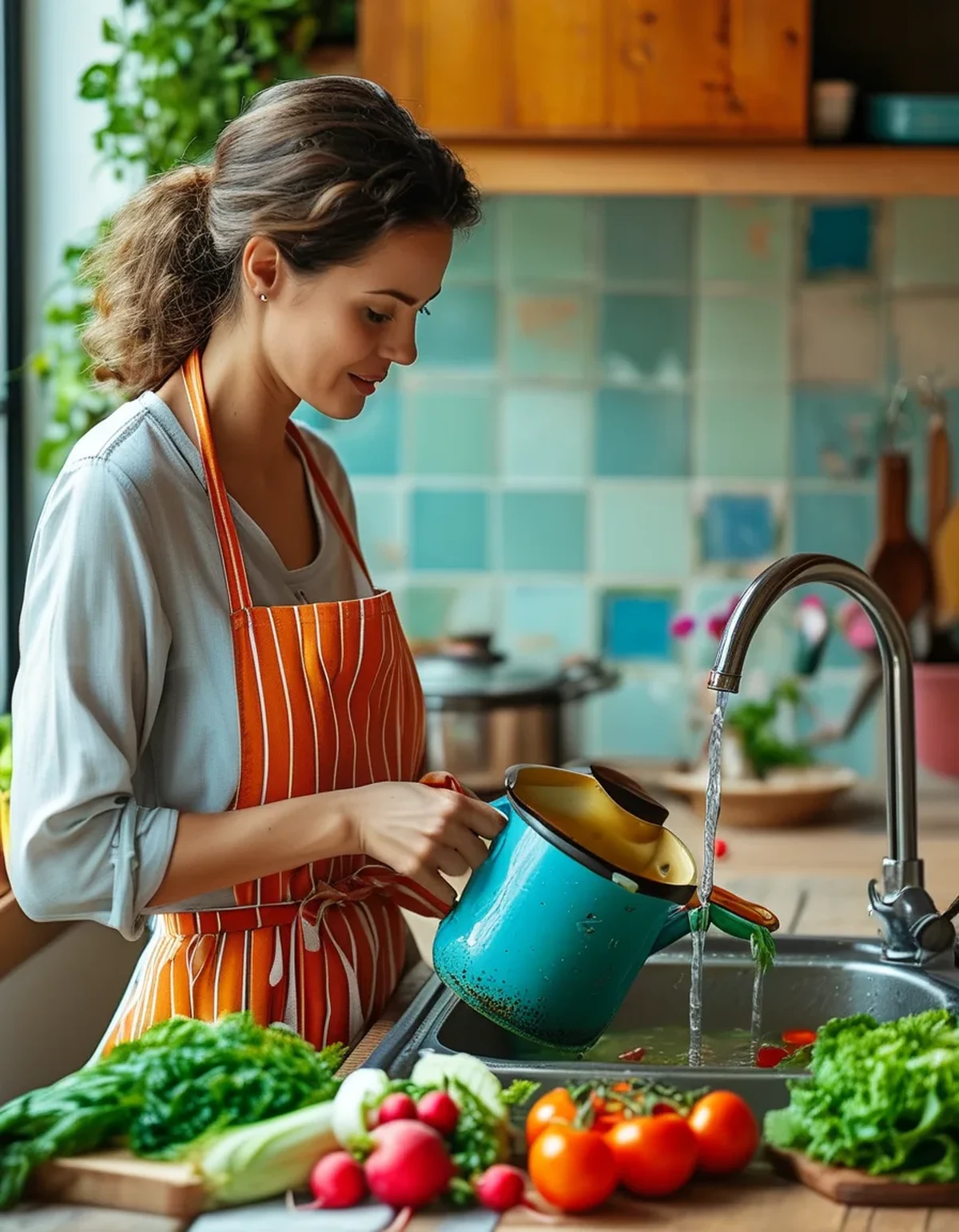
You boil red cabbage and the water turns deep violet.
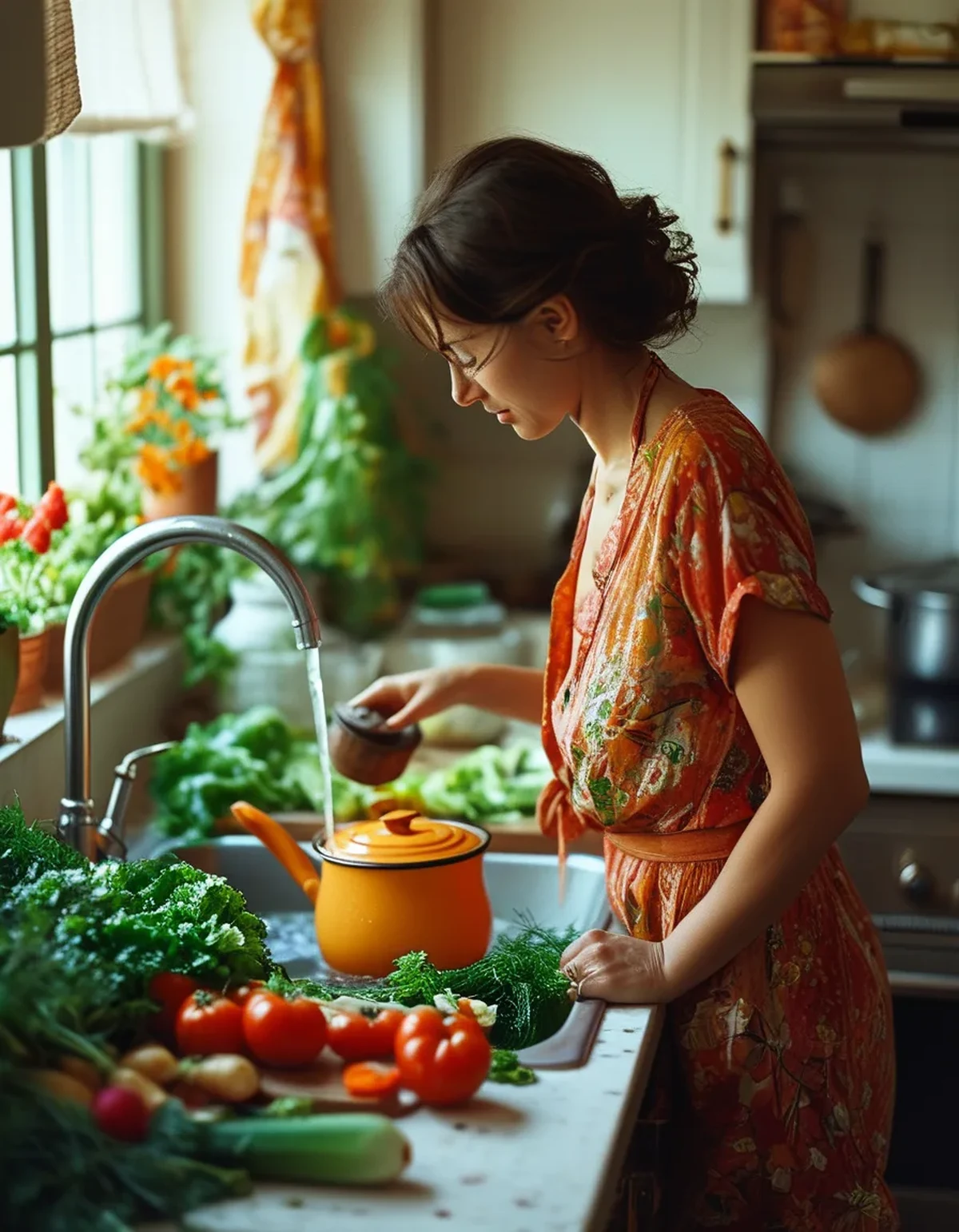
You pour it down the sink.
That violet was in the cabbage forty minutes ago, and now it is in the drain.
What is actually leaving the vegetable?
The pigments in vegetables are not decoration — most of them are the nutrients themselves, or they travel alongside them.
Anthocyanins give red cabbage, blueberries, purple carrots, and beets their color. They are highly water-soluble, which is why they leach so dramatically. They are also the pigments most associated with antioxidant activity in those foods.
Betalains in beets behave similarly and are also heat-sensitive, which is a double loss.
Chlorophyll gives greens their color. It is less water-soluble but degrades with heat and acid, which is why overcooked greens turn from bright green to olive.
Carotenoids — beta-carotene in carrots, lycopene in tomatoes, lutein in kale — are fat-soluble, not water-soluble. They largely stay put during boiling.
Vitamin C and B vitamins are highly water-soluble and travel with the water regardless of what color the vegetable is.
So the color of your water tells you which category you are dealing with. Vivid purple or red water means significant anthocyanin loss. Faintly cloudy water from carrots means you lost some vitamin C but kept nearly all the beta-carotene.
How much are we actually talking about?
Enough to matter, not enough to panic about.
Boiling is the worst case for water-soluble nutrients. Depending on the vegetable, cut size, and time, boiling can cost a substantial fraction of vitamin C and a meaningful share of anthocyanins into the water.
The variables that drive it:
- Surface area. Finely chopped vegetables leach far more than whole or large pieces. This is the biggest single factor and the easiest to control.
- Time. Losses accelerate with duration. The difference between four minutes and twelve is large.
- Water volume. More water means more dilution gradient, which means more leaching. Cooking in a large pot of water costs more than a small one.
- Whether you eat the water. This is the one that changes everything and the one people ignore.
That last point is the whole article, really. If the purple water becomes soup, nothing was lost. If it goes down the drain, it did.
Which cooking methods actually preserve color nutrients?
Ranked roughly from best to worst for water-soluble retention:
Steaming. The vegetable never sits in water, so leaching is minimal. Retention of vitamin C and anthocyanins is substantially better than boiling. This is the single easiest upgrade for most people.
Microwaving. Genuinely good, despite its reputation. Short times, minimal added water, and no soaking. For a lot of vegetables it outperforms every stovetop method for nutrient retention.
Roasting. No water to leach into, so water-soluble nutrients stay in the food. High heat does degrade some vitamin C, but nothing washes away. It also concentrates flavor, which means people eat more vegetables — a benefit that does not show up in a nutrient table.
Stir-frying. Fast, minimal water, and the added fat improves carotenoid absorption. Very good overall.
Boiling with the water retained. Soups, stews, and braises lose nothing, because the leachate is the meal. A borscht loses no anthocyanins.
Boiling and draining. The worst case, and also the most common.
The practical takeaway is unglamorous: if you own a steamer basket, use it. If you do not, a lidded pan with two centimeters of water does most of the same job.
Myth vs Fact: cooking destroys nutrients
Myth: Raw vegetables are always more nutritious than cooked.
Fact: It depends entirely on the nutrient. Cooking reduces vitamin C and some B vitamins. It substantially increases the bioavailability of carotenoids — cooked tomatoes deliver far more usable lycopene than raw, and cooked carrots more beta-carotene. A raw-only approach costs you as much as it saves.
Myth: The color in the water is just food dye leaching out and does not matter.
Fact: In anthocyanin-rich vegetables, the pigment is one of the compounds you were eating them for. It is not incidental.
Myth: Green water from spinach means you destroyed all the nutrients.
Fact: Green water usually means chlorophyll and some water-solubles left. Spinach’s iron, calcium, and carotenoids largely remain. Green water is a much smaller loss than purple water.
Myth: Adding baking soda keeps greens bright, so it must be preserving nutrients.
Fact: Alkaline water does keep chlorophyll green, and it also accelerates the destruction of vitamin C and thiamine. It trades appearance for content. A small amount of acid does the reverse for anthocyanins, which is why a splash of vinegar keeps red cabbage red.
What can you do with the colored water?
This is the part that turns a loss into a non-loss, and most of it takes no extra effort.
Make it the base of the dish. Cook the vegetable in the liquid the dish will use anyway — a risotto, a soup, a braise, a stew. Nothing leaves.
Save it as stock. Vegetable cooking water is a legitimate stock base and freezes well. Keep a container in the freezer and add to it.
Use it for grains. Cook rice, couscous, or quinoa in reserved vegetable water. It adds color, mild flavor, and returns the leached nutrients to the plate.
Reduce it into a sauce. Beet or red cabbage water reduced with a little vinegar and sugar becomes a vivid sauce that is genuinely useful.
Water your plants with it. Least useful for you, but better than the drain, and it is the answer for water that is too salty or too bitter.
One caution: water from very bitter greens, or heavily salted water, is not always pleasant to reuse. Taste it before committing it to a dish. Cruciferous cooking water in particular can be strong.
Does this change with the season?
It does, and late summer into autumn is when the calculation shifts most.
Summer eating skews raw — salads, fresh fruit, minimally cooked vegetables. Water-soluble losses are naturally low because there is not much cooking happening.
Autumn flips that. The produce shifts to roots, brassicas, and squash, and the cooking shifts to boiling, braising, and roasting. Red cabbage, beets, and purple carrots are exactly the anthocyanin-rich vegetables that leach most, and they arrive in season precisely when people start boiling things.
The good news is that autumn cooking methods are naturally more forgiving. Soups, stews, and braises retain the liquid by definition. Roasting has no liquid to lose. The problem case is the specific habit of boiling a vegetable as a side dish and draining it — which is the most traditional way to cook exactly these vegetables.
A seasonal rule worth adopting: if it comes out of the ground and it has a strong color, do not boil and drain it. Roast it, braise it, or keep the liquid. That single habit covers most of the autumn produce where this matters.
FAQ: Cooking Water and Color, Answered
Is the water from pasta or potatoes worth keeping?
Pasta water is worth keeping for its starch, which emulsifies sauces — that is a cooking benefit rather than a nutrition one. Potato water contains leached potassium and some vitamin C and works well in soups and bread.
Does soaking vegetables before cooking cost nutrients?
Yes, for water-soluble ones, and cut vegetables lose considerably more than whole ones. Wash whole, then cut. Soaking chopped vegetables in water for an hour is a genuine loss for no benefit.
Does frozen produce have this problem?
Frozen vegetables are typically blanched before freezing, which costs some water-soluble content up front. But they are frozen at peak and lose little afterward, which often makes them better than fresh produce that has sat in a fridge for a week. It is not a clear win for either.
Should I stop boiling vegetables entirely?
No. Boiling is fast, easy, and gets vegetables eaten, which matters more than optimizing retention. Just steam when it is equally convenient, and keep the water when the dish allows it.
This is general information, not nutrition advice.
TL;DR:
- Colored cooking water means water-soluble pigments and nutrients have left the vegetable — vivid purple or red is a real loss, faintly orange usually is not.
- Anthocyanins and vitamin C leach readily; fat-soluble carotenoids largely stay in the food.
- Surface area, time, and water volume drive how much you lose — chopping small and boiling long is the worst combination.
- Steaming, microwaving, roasting, and stir-frying all avoid the problem; boiling and draining is the only method where the loss is permanent.
- Keep the water and there is no loss at all: use it for grains, stock, sauces, or make the dish a soup.
The simplest habit to adopt going into autumn: strongly colored root and brassica vegetables should be roasted, braised, or cooked in liquid you intend to eat. That covers red cabbage, beets, and purple carrots — the three most dramatic offenders — and it requires learning nothing new about nutrition at all.
Keep Reading
This article is for general informational purposes only and is not medical advice. Always consult a qualified health professional for guidance specific to you.