Why Peeling Costs You More Colour Nutrients Than Cooking Does
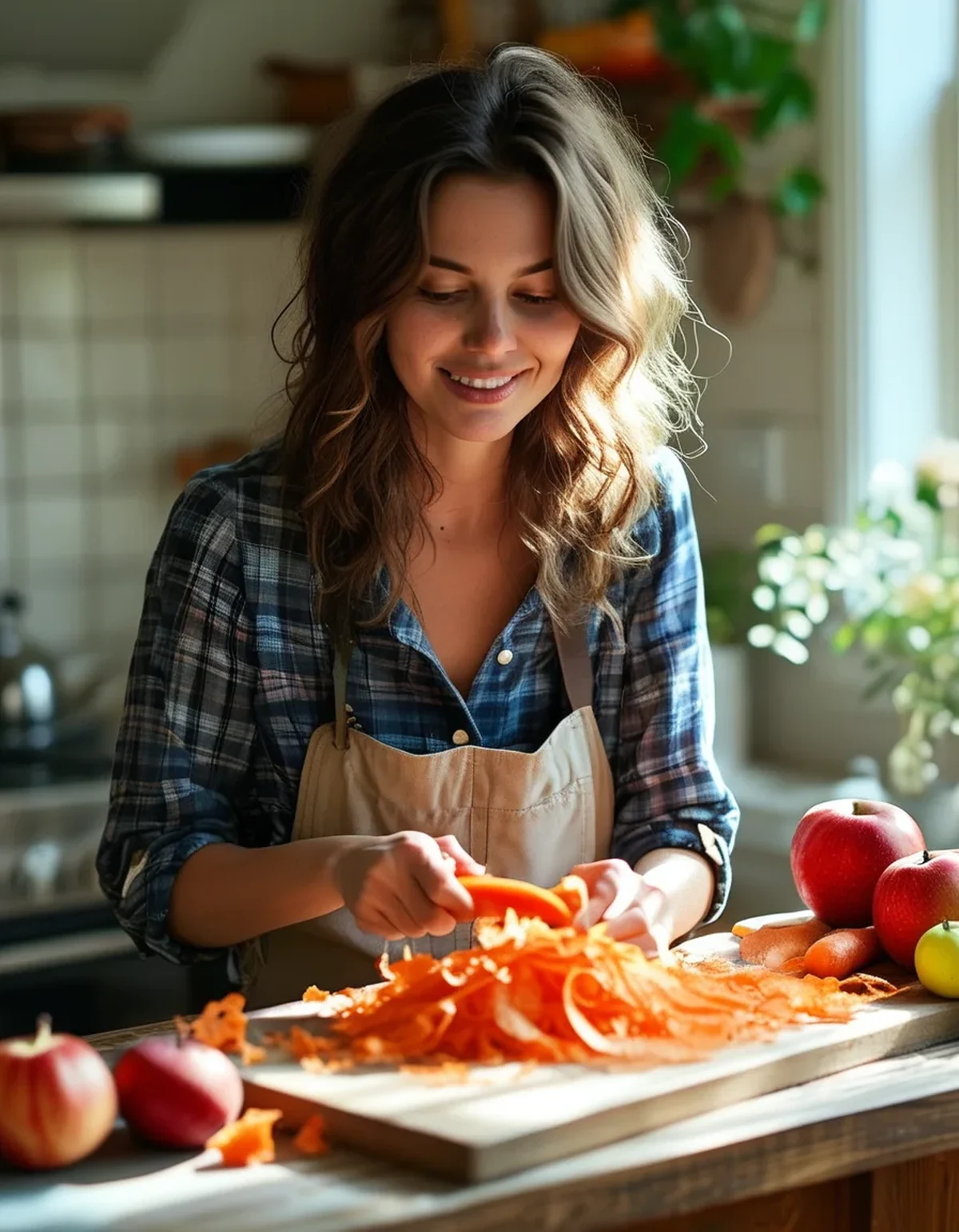
Quick Answer: Most colour compounds — anthocyanins, flavonoids, carotenoids — are concentrated in and just under the skin, because that is where the plant needed protection from sunlight and pests. Peeling can remove a large share of the flavonoid content of apples, potatoes, and aubergines in one motion. Cooking, by comparison, typically costs 10 to 40% of the heat-sensitive nutrients and actually increases the availability of some carotenoids. The peeler is doing more damage than the pan.
It is one of the more counterintuitive things in everyday nutrition.
And it is a habit almost nobody questions.
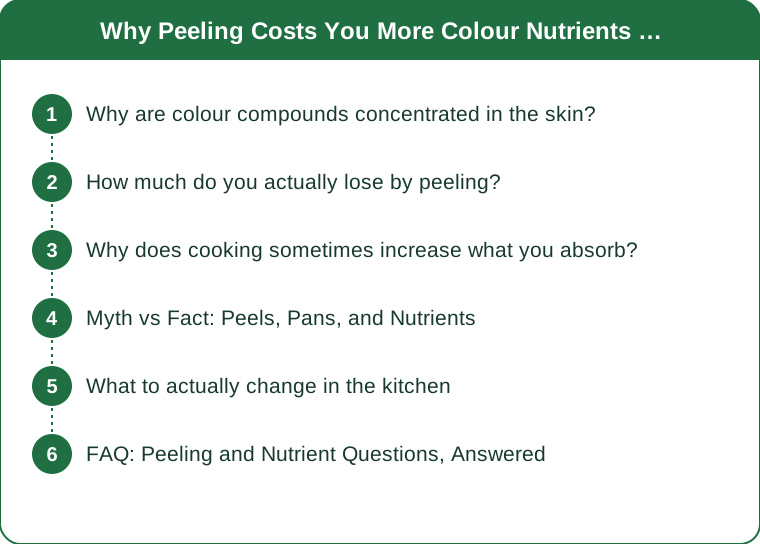
Why are colour compounds concentrated in the skin?
Because that is where the plant needed them.
Many of the compounds we value in produce evolved as protective chemistry — defence against ultraviolet light, insects, and fungi. The logical place for a plant to concentrate a UV-protective pigment is the surface exposed to UV. The logical place for a bitter defensive compound is where something would bite first.
So the skin and the layer immediately beneath it carry a disproportionate share of:
- Anthocyanins — the reds, purples and blues in aubergine, red cabbage, plums, berries, red apples
- Flavonoids — heavily concentrated in apple, onion, and citrus peel
- Carotenoids — highest in the outer layers of carrots and squash
- Fibre, which is not a colour compound but is heavily skewed to the skin
A useful mental model: the colour you can see on the outside is not a coating, it is the concentration. When you peel a purple aubergine you are left with something white, and the white part is where almost none of the anthocyanins were.
That is a striking way to see it, and it applies more broadly than most people realise.
How much do you actually lose by peeling?
It varies by vegetable, but the numbers are substantial where they have been measured.
Apples are the most studied case. A large share of an apple’s flavonoid content sits in the peel, along with a meaningful proportion of its fibre and vitamin C. Peeled apple is still a perfectly good food; it is simply a considerably less interesting one.
Potatoes hold much of their fibre and a good deal of their vitamin C and potassium in and just under the skin. A peeled boiled potato is a different nutritional item from a jacket potato.
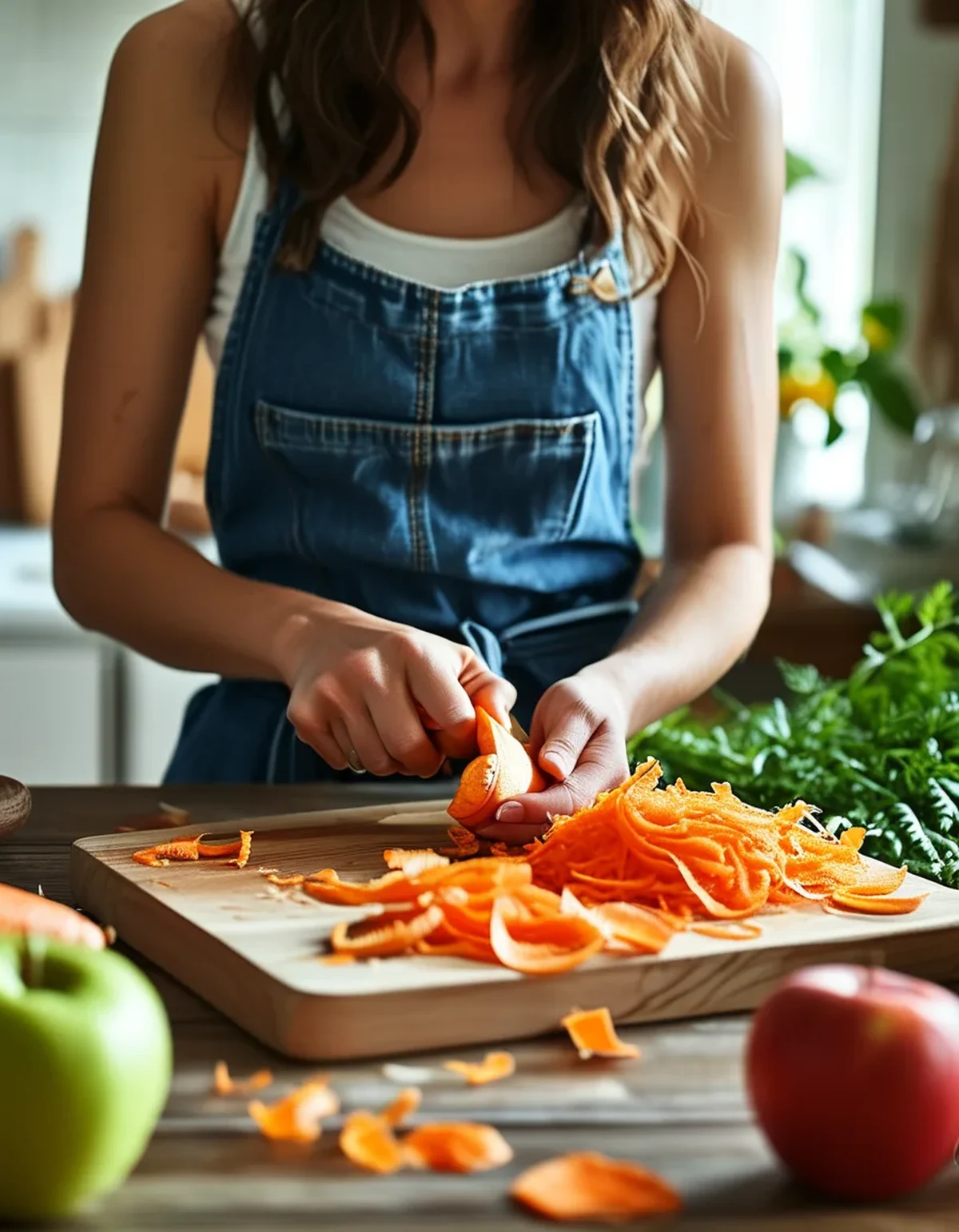
Carrots keep a higher carotenoid concentration in the outer layer, which is exactly the part a peeler removes.
Aubergine loses effectively all of its anthocyanin content when peeled, because all of it is in the purple skin.
Cucumber keeps almost all of its remaining nutrients in the skin — a peeled cucumber is largely water and texture.
Compare that to cooking, where losses are real but bounded: boiling costs the most, typically 20 to 40% of water-soluble vitamins, while steaming, roasting, and microwaving generally cost less. And cooking makes some nutrients more available, not less.
Why does cooking sometimes increase what you absorb?
Because plant cell walls are genuinely difficult to break down.
Carotenoids like beta-carotene and lycopene are locked inside cell structures that human digestion opens only partially. Heat breaks those structures down, which is why cooked carrots and cooked tomatoes deliver more available carotenoid than raw ones — a well-established finding, and the reason tomato paste is such an efficient lycopene source.
Fat matters here too. Carotenoids are fat-soluble, so a tablespoon of oil on roasted carrots meaningfully improves absorption compared to eating them plain.
Meanwhile the compounds that are damaged by heat — vitamin C, folate, some B vitamins — are also the ones that leach into cooking water. That gives an obvious mitigation: use the water, or use a method that does not involve much of it.
So the honest summary is that cooking trades a moderate loss of water-soluble vitamins for a meaningful gain in fat-soluble availability, and the net effect depends entirely on the vegetable. Peeling, by contrast, is a straight loss with no compensating gain.
Myth vs Fact: Peels, Pans, and Nutrients
Myth: Raw vegetables are always more nutritious than cooked.
Fact: It depends on the nutrient. Raw wins for vitamin C and folate; cooked wins clearly for carotenoids and lycopene. A diet with both is better than a diet committed to either.
Myth: You should peel vegetables to remove pesticide residues.
Fact: Washing removes most surface residue, and peeling removes a great deal of nutrition along with a modest additional amount of residue. Where residues are a specific concern, washing thoroughly or choosing organic addresses it better than peeling does.
Myth: The peel is indigestible anyway.
Fact: Most vegetable skins are perfectly digestible and are a significant fibre source. A few — squash skins, thick citrus pith, tough root skins — are genuinely unpleasant, and those are legitimate exceptions.
Myth: Boiling destroys everything.
Fact: Boiling costs the most of the common methods, and losses still typically sit in the 20 to 40% range for the affected nutrients rather than anything approaching total. The surprising part is how much smaller that is than what a peeler removes in five seconds.
What to actually change in the kitchen
A short list, in order of how much difference it makes.
Stop peeling by default. Carrots, potatoes, cucumbers, courgettes, apples, aubergines, and parsnips are all fine unpeeled. Wash them properly and cook them as they are. This is the single largest change and it saves time.
Keep peeling where it genuinely matters. Squash with tough skin, anything waxed, damaged or bruised produce, and root vegetables from heavy soil where you cannot get them properly clean.
Choose cooking methods that keep the water. Roasting, steaming, and microwaving retain more than boiling. If you do boil, use the water in a sauce, soup, or gravy.
Add a little fat to anything orange, red, or dark green. Oil on roasted carrots, squash, tomatoes, or greens meaningfully improves carotenoid absorption.
Cook briefly and cut large. Smaller pieces have more surface area, which means more leaching. Larger pieces cooked a bit longer often retain more overall.
Use the peels you do remove. Carrot and onion skins make excellent stock. Potato peels roast well with oil and salt.
The underlying point is that late summer and early autumn produce — squash, apples, root vegetables, plums — is exactly the category where skins carry the most colour, so this is a good moment to change the habit.
FAQ: Peeling and Nutrient Questions, Answered
Does washing remove nutrients too?
Negligibly. Brief washing under cold water removes dirt and surface residue and costs almost nothing nutritionally. Prolonged soaking in water does leach water-soluble vitamins, so wash rather than soak.
What about wax on apples and cucumbers?
Food-grade wax coatings are considered safe. If you would rather not eat them, scrub under warm water with a brush — that removes most of it while keeping the peel and everything in it.
Is it worth eating citrus peel?
Citrus zest is genuinely one of the more concentrated flavonoid sources in a normal kitchen and is easy to add — grated into dressings, yoghurt, or a marinade. The white pith is bitter and not worth forcing.
My child will not eat vegetables with skin on. Does it matter?
Much less than whether they eat the vegetable at all. A peeled carrot eaten beats an unpeeled one refused, every time. Optimise the habit first and the details later.
This is general information, not personalised nutrition advice.
TL;DR:
- Colour compounds concentrate in and just under the skin, because that is where the plant needed protection
- Peeling removes a large share of flavonoids, fibre, and carotenoids in one motion
- Cooking typically costs 10 to 40% of heat-sensitive nutrients — and increases available carotenoids
- Roast, steam, or microwave rather than boil, and use the cooking water when you do
- Add a little fat to orange, red, and dark green vegetables
If you have been carefully steaming vegetables to protect their nutrients and then peeling them first, the order of concern is backwards. Put the peeler away for a week and see how little you miss it — autumn produce is the best possible time to start.
Keep Reading
This article is for general informational purposes only and is not medical advice. Always consult a qualified health professional for guidance specific to you.