Why Eating the Rainbow Means Something Different in Autumn
Quick Answer: Plant pigments correspond loosely to different families of phytonutrients, so eating a range of colours is a reasonable shorthand for eating a range of compounds. In autumn the easy colours change: reds and bright greens get harder, while oranges, deep purples and whites get cheaper and better. The practical move is to lean into what is genuinely in season - squash, beets, red cabbage, dark leafy greens - and to use frozen produce without apology for the colours that have left.
Your summer plate was colourful without any effort at all.
The autumn plate needs about ten minutes of thought, and then it is just as good.
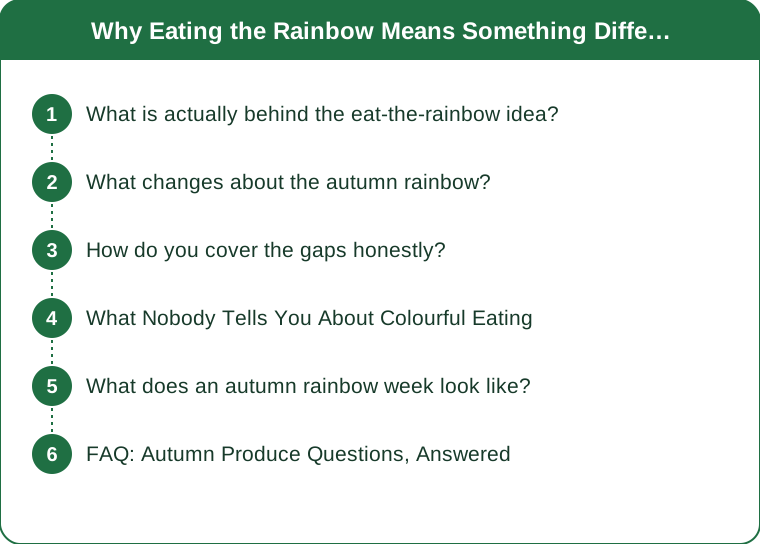
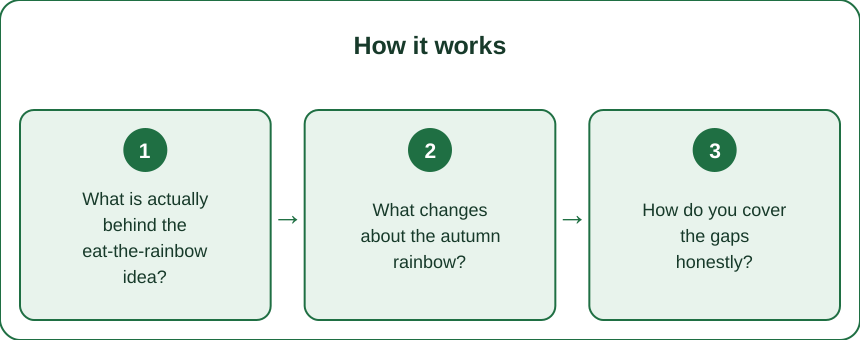
What is actually behind the eat-the-rainbow idea?
Plant pigments are themselves bioactive compounds, not merely decoration. Carotenoids, anthocyanins, chlorophyll, betalains and flavonoids all have colour and all have biological activity.
Different colours correspond loosely to different compound families, which is why variety of colour is a workable proxy for variety of compound.
Orange and yellow tend toward carotenoids - beta-carotene, lutein, zeaxanthin - associated with eye health and vitamin A activity.
Red and purple tend toward anthocyanins and lycopene, which are among the most studied dietary antioxidants.
Dark green means chlorophyll plus carotenoids plus folate, which is why greens punch above their weight nutritionally.
White and brown are the forgotten category - onions, garlic, leeks, mushrooms, cauliflower - carrying allicin, quercetin and, in mushrooms, some vitamin D.
The shorthand is imperfect but useful. It is not a precise nutritional framework; it is a practical way to avoid eating the same three vegetables all week.
What changes about the autumn rainbow?
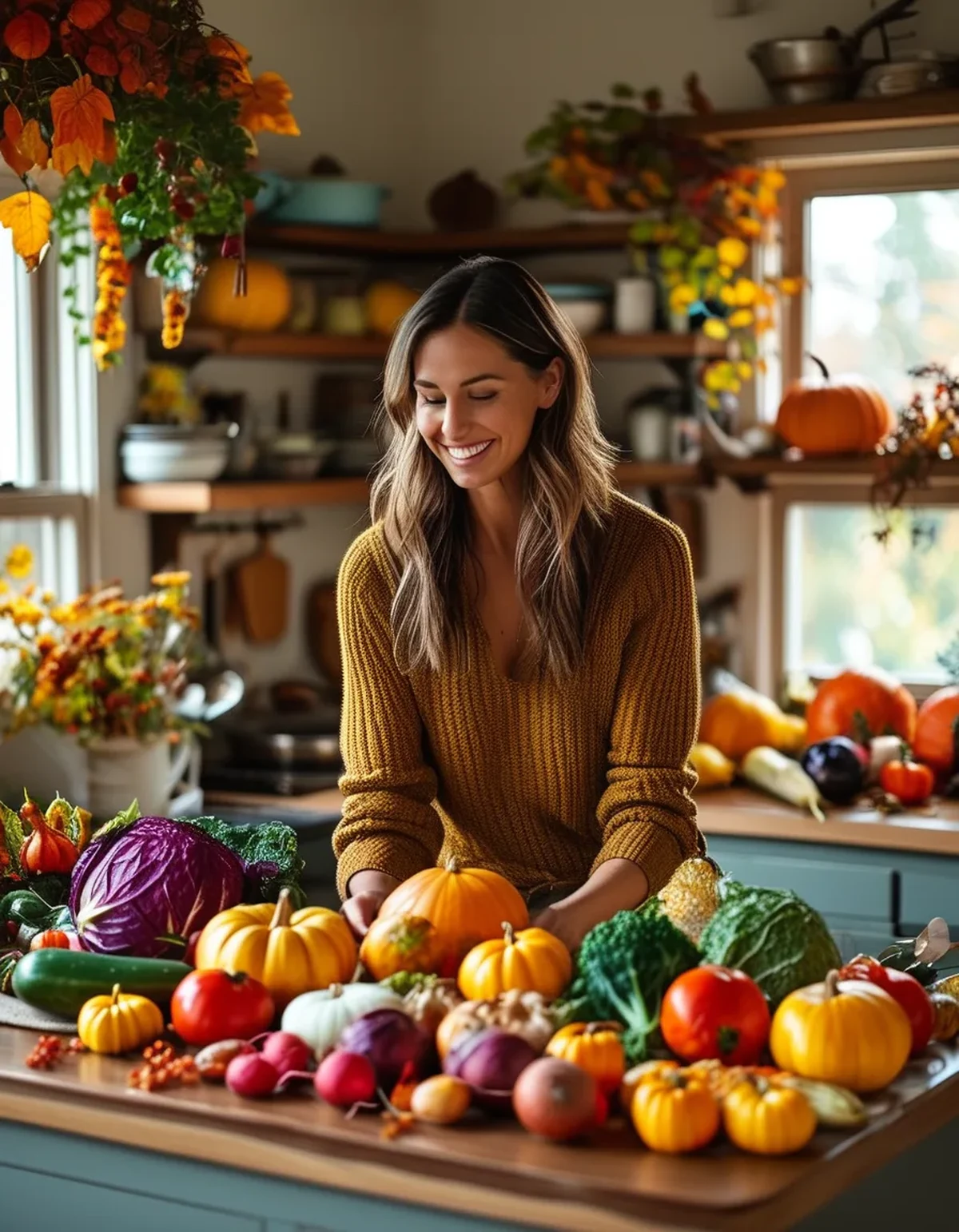
Orange becomes abundant and excellent - squash, pumpkin, sweet potato, carrots - and it is genuinely at its best now rather than a compromise.
Deep purple becomes easy and cheap: red cabbage, beets, aubergine, purple carrots, blackberries at the start of the season.
Dark greens shift from salad greens to hardy ones - kale, chard, cabbage, Brussels sprouts - which are actually improved by frost.
Red gets harder. Tomatoes and peppers lose quality and rise in price, and this is the colour most worth covering with canned or frozen.
White and brown come into their own with mushrooms, onions, leeks, garlic, parsnips, cauliflower and celeriac.
And the storage vegetables are more nutrient-dense than their reputation, because they were grown to full maturity rather than picked early for transport.
How do you cover the gaps honestly?
Frozen produce is nutritionally comparable to fresh and often better than out-of-season fresh, because it is frozen at peak ripeness within hours of picking. Frozen berries, peas and spinach cover three colours year-round.
Canned tomatoes are a genuinely superior autumn choice to pale fresh ones, and the lycopene is more bioavailable after cooking.
Cooking increases the bioavailability of some compounds - lycopene in tomatoes, beta-carotene in carrots - so autumn’s cooked-food bias is not a loss.
Fat improves absorption of the fat-soluble carotenoids, so olive oil on roasted squash is doing nutritional work rather than only tasting good.
Frozen berries in porridge covers the red and purple that a September salad no longer can.
And do not chase out-of-season fresh produce for the colour, which costs more and delivers less. The seasonal version of the same colour is nearly always better.

What Nobody Tells You About Colourful Eating
Colour intensity roughly tracks compound concentration. A deep orange sweet potato has more beta-carotene than a pale one, and dark red cherries have more anthocyanin than pale ones. Choosing the darker specimen is a free upgrade at the shop.
Cooking method changes colour and content. Boiling leaches water-soluble compounds into the water; roasting and steaming retain far more. If you boil, use the liquid.
Purple vegetables lose colour in alkaline conditions and keep it in acid - which is why red cabbage cooked with a splash of vinegar stays vividly purple and cooked plain turns blue-grey. Colour retention here tracks anthocyanin retention.
Skins carry a disproportionate share. Much of the phytonutrient content of many vegetables sits in or near the skin, so scrubbing rather than peeling is a real nutritional decision.
Variety across the week matters more than variety in a single meal, which takes the pressure off any individual plate.
Herbs and spices count and are the cheapest way to add colour and compounds - parsley, turmeric, paprika, cinnamon all bring both.
And white vegetables are chronically undervalued because the rainbow framing implies they are absent from it. Onions and garlic are among the most studied vegetables there are.
What does an autumn rainbow week look like?
Orange: roasted squash or sweet potato twice a week, with olive oil.
Purple: red cabbage braised with apple and vinegar, or roasted beets in a grain bowl.
Dark green: kale or chard sauteed with garlic, or shredded cabbage in a slaw.
Red: canned tomatoes in a sauce or soup, plus frozen berries at breakfast.
White and brown: mushrooms, onions and leeks as the base of most cooked dishes.
Yellow: sweetcorn from frozen, yellow peppers where affordable, or turmeric in a dal.
Roast a large mixed tray on the weekend - squash, beets, red onion, carrot - which covers four colours in one operation and provides the base for four meals.
And keep frozen berries, frozen peas and frozen spinach permanently stocked, which is the whole gap-filling strategy in three items.
FAQ: Autumn Produce Questions, Answered
Is frozen produce as good as fresh?
Generally yes, and often better than out-of-season fresh, because it is frozen at peak ripeness within hours of harvest. Frozen berries, peas and spinach are excellent year-round choices.
Does cooking destroy nutrients?
It depends on the nutrient. Vitamin C and folate degrade with heat, while lycopene and beta-carotene become more bioavailable when cooked. Varying your preparation methods covers both.
How many colours should I aim for daily?
Three to five colours a day is a reasonable target, and variety across the week matters more than any single perfect plate.
Are white vegetables less nutritious?
No. Onions, garlic, mushrooms, cauliflower and leeks carry well-studied compounds. The rainbow framing simply makes them easy to forget.
Why does my red cabbage turn blue when cooked?
Anthocyanins change colour with pH. Add a splash of vinegar or lemon juice and it stays purple - which also helps retain the pigment itself.
Should I peel vegetables?
Often not. A significant share of phytonutrients sits in or near the skin. Scrub rather than peel where the skin is pleasant to eat.
TL;DR:
- Plant pigments are bioactive compounds, so colour variety is a workable proxy for compound variety.
- The autumn rainbow shifts: orange, deep purple, hardy greens and white all get better; red gets harder.
- Frozen and canned cover the gaps honestly - frozen berries, peas and spinach are the three-item strategy.
- Cooking increases bioavailability of lycopene and beta-carotene, so autumn’s cooked bias is not a loss.
- Add fat to carotenoid-rich vegetables; olive oil on roasted squash is doing real work.
- Choose the darker specimen - colour intensity tracks compound concentration.
A weekend roasting tray covers four colours in one operation. This is general information, not medical advice.
Keep Reading
This article is for general informational purposes only and is not medical advice. Always consult a qualified health professional for guidance specific to you.