Why White Counts: The Pale Foods the Rainbow Rule Forgets
Quick Answer: The eat-the-rainbow rule works because plant pigments track with families of beneficial compounds — but some of the most-studied compounds in the produce aisle are colorless. Alliums carry sulfur chemistry, white crucifers carry glucosinolates, and mushrooms carry beta-glucans and ergothioneine, none of which show up as color. White got dropped from the rainbow for two bad reasons: it photographs poorly, and it shares a name with refined white foods that deserve their reputation. Treat white as a full color group with a daily slot, and the rainbow plate gets meaningfully better without getting prettier.
The rule of thumb: the rainbow tells you pigments are present. It cannot tell you nothing is there.
What do white foods actually carry?
Chemistry that skipped the paint job.
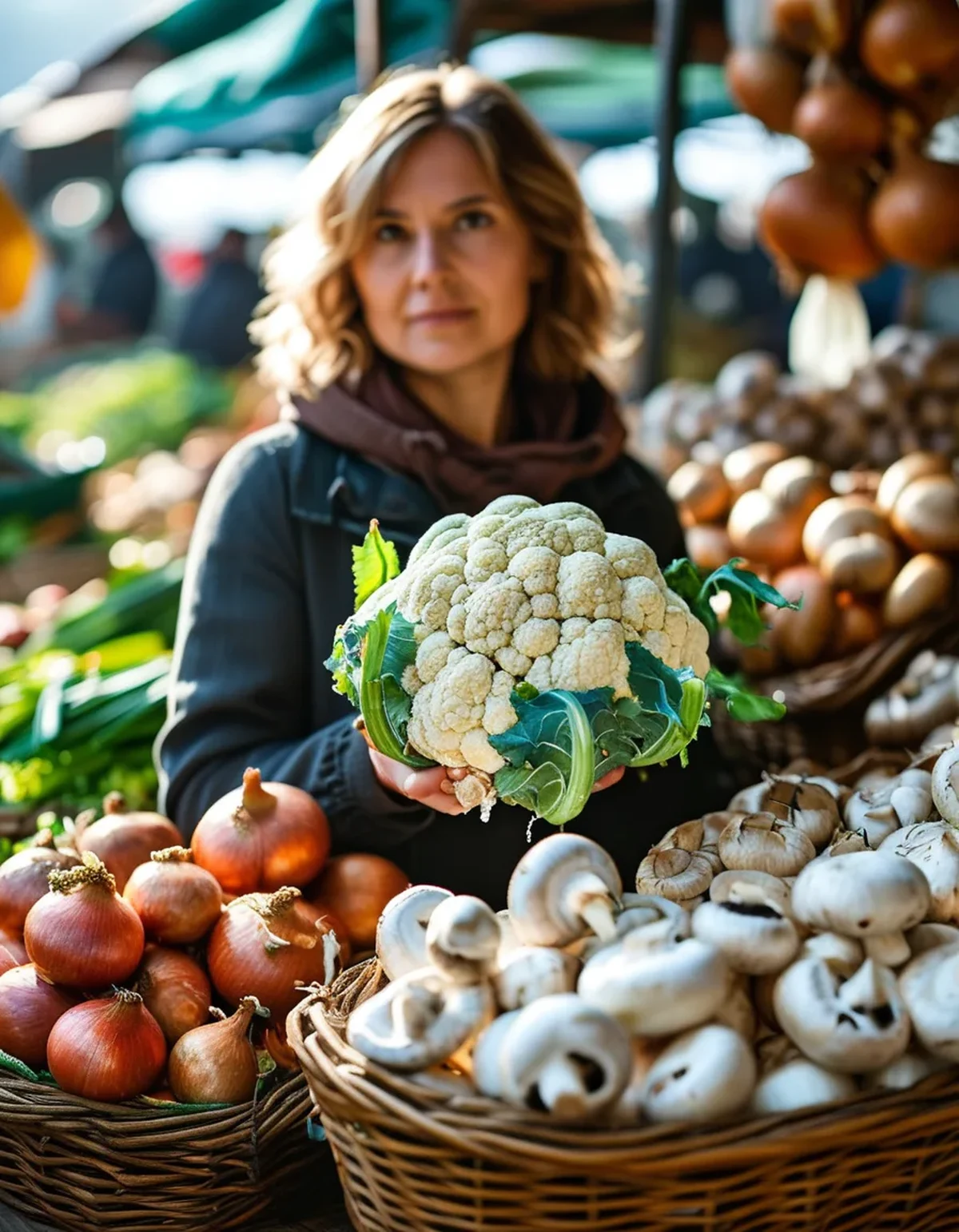
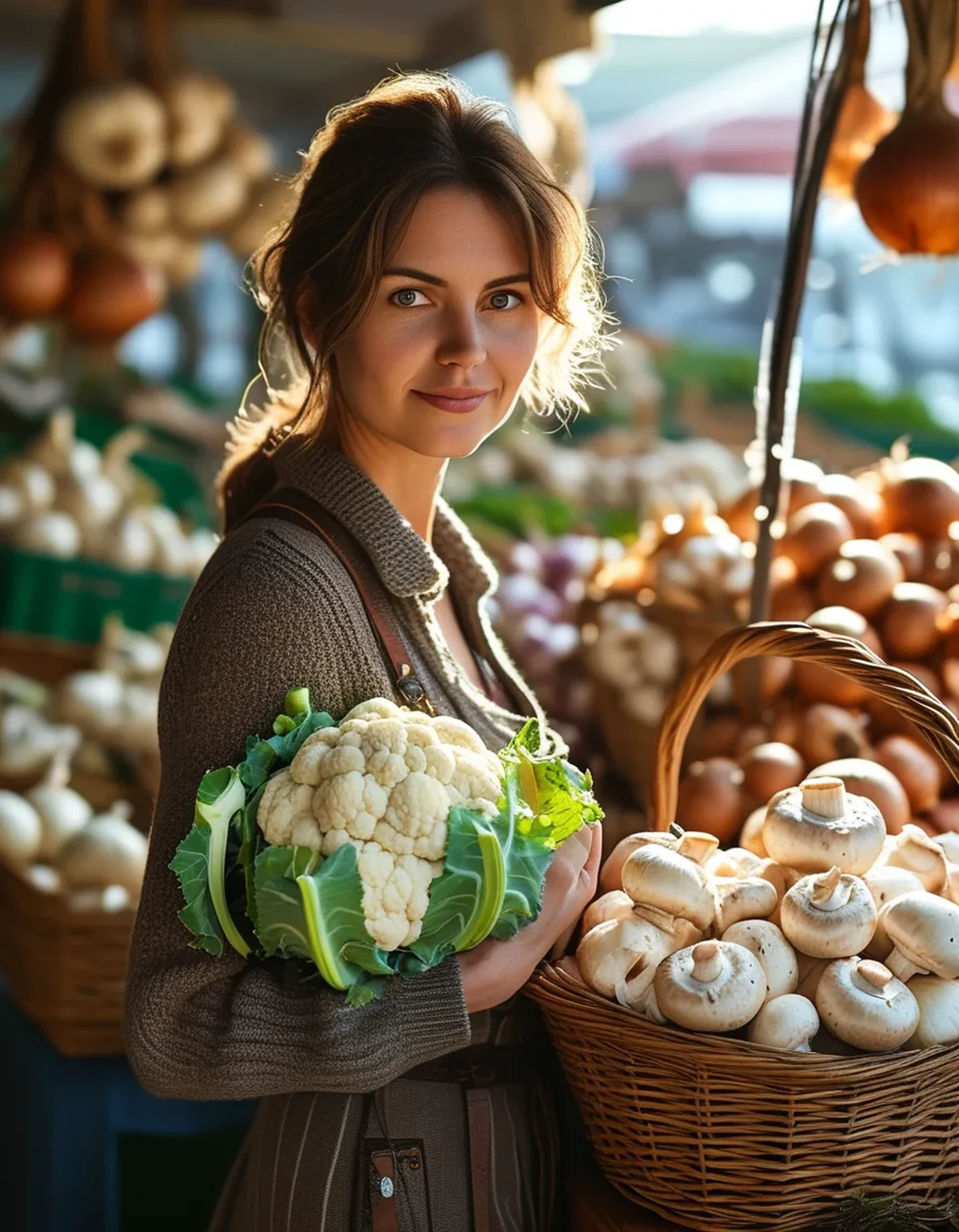
The alliums — garlic, onions, leeks, shallots, scallions — are the flagship. Their sulfur compounds, including the famous allicin that forms when garlic is crushed, are among the most-researched substances in the food supply, studied for decades in connection with cardiovascular markers. Onions are also one of the richest common sources of quercetin, a flavonoid that happens to be nearly colorless at the concentrations food carries. An onion is functionally a supplement aisle with a papery skin, and it never registers on a color-count.
The white crucifers — cauliflower, turnips, daikon, kohlrabi — belong to the same family as broccoli and kale and carry the same signature glucosinolates, the pungent sulfur compounds the brassica family is studied for. Cauliflower is not pale broccoli that lost its nutrients; it is a sibling with a comparable toolkit and no chlorophyll over it.
Mushrooms — technically not plants at all — bring chemistry nothing else on the plate has: beta-glucan fibers of the type studied for immune signaling, and ergothioneine, an unusual dietary antioxidant that mushrooms happen to be the best common source of. They are also the one produce-section item that can carry meaningful vitamin D, with an asterisk worth its own section below.
Add jicama and parsnips for inulin-type fibers that feed gut bacteria, and the pattern is clear: whole point of the white group is that pigment and payload are different things.
Why did white fall off the rainbow?
A branding accident with two roots, neither of them nutritional.
The first is visual. Rainbow-plate content is built for the camera, and a palette of reds, purples, and greens sells the idea. White foods read as blank space in the photo — so the bell pepper made the poster and the turnip did not. Educational shorthand followed the aesthetics, and a generation absorbed the idea that color intensity equals virtue.
The second is a name collision. Decades of sensible advice to ease off refined white foods — white bread, white rice, pastries — bled into a vaguer feeling that white food is beige food is empty food. But the whiteness of enriched flour and the whiteness of a raw turnip have nothing to do with each other. One is a processing outcome; the other is just a plant that never made anthocyanins. The color rule got applied across a category boundary where it carries zero information.
The potato deserves its own acquittal here: a plain potato brings potassium in quantities bananas get credit for, vitamin C, and — when cooked and cooled, as in potato salad — a meaningful dose of resistant starch that behaves like fiber. What earned potatoes their reputation is the fryer and the toppings, not the tuber.
None of this argues against colorful produce; pigments genuinely do track with valuable compound families. The argument is narrower and more useful: absence of color is not evidence of absence, and a rule of thumb should not delete a food group.
Myth vs Fact: Pale Produce
Myth: Garlic only works raw. Fact: Heat does destroy the enzyme that produces allicin — but crushing or chopping garlic and letting it rest about ten minutes before it hits the pan lets the reaction complete first, preserving much of the sulfur chemistry through cooking. The rest is the trick; rawness is optional.
Myth: Button mushrooms are the boring, worthless kind. Fact: Ordinary white buttons and creminis carry the beta-glucans and ergothioneine the fancy varieties are praised for — creminis and portobellos are literally the same species at different ages. Exotic mushrooms add variety, not a monopoly.
Myth: Mushrooms are a vitamin D food, full stop. Fact: Only if UV was involved. Mushrooms make vitamin D2 when exposed to ultraviolet light — commercially UV-treated ones say so on the label, and ordinary ones can be gill-side-up sunbathed on a windowsill for 15 to 30 minutes to generate their own. Dark-grown, straight to the pan: negligible.
Myth: Cooking onions wastes them. Fact: Quercetin is comparatively heat-stable, and slow-cooked onions concentrate as they lose water. Save the papery outer-adjacent layers where quercetin is densest — the compound sits disproportionately toward the outside of the bulb.
Myth: White rice logic applies to white vegetables. Fact: Refined-grain whiteness comes from removing the bran and germ; vegetable whiteness is just genetics. The first lost something. The second never had pigment to lose.
How do you add a white serving a day without thinking?
By noticing you already almost do, then upgrading the habit deliberately.
Claim the allium base. Most home cooking begins with an onion or garlic anyway — the sofrito reflex. Upgrade it from garnish-quantity to ingredient-quantity: a whole onion where half went before, two extra cloves, leeks folded into anything soup-shaped. The ten-minute garlic rest slots here: chop garlic first, let it sit while everything else gets prepped, cook as normal.
Roast a white tray weekly. Cauliflower florets, parsnip batons, quartered mushrooms, wedged onions — high heat, olive oil, and the browning that makes pale vegetables taste like something worth photographing after all. One sheet pan covers three or four days of side-dish duty.
Run the windowsill mushroom trick. Before cooking, gills up in direct sun while you prep; late-summer light is still strong enough to make it worthwhile. It is the only produce upgrade that costs literally nothing.
Keep a raw white on rotation. Daikon or kohlrabi sticks, jicama with lime and chili, thin-shaved raw turnip in salads — the crunchy application the white group does better than almost any colored vegetable.
Store for the season you are in. Alliums want dry, dark, and ventilated — not the refrigerator, and not a sealed bag in August humidity. Mushrooms want the paper bag, never plastic, where they slime. A white group that keeps well is a white group that actually gets eaten.
Count it like a color, and the rainbow becomes six groups deep with zero extra effort — the rare nutrition upgrade that is mostly a bookkeeping change.
FAQ: White Food Questions, Answered
Does the ten-minute garlic rest really matter?
It is one of the better-supported small kitchen habits: the allicin-forming reaction needs intact enzyme time, and heat ends it. Crush, wait, then cook preserves what crush-and-immediately-sear destroys. If dinner cannot wait, adding some raw garlic at the end accomplishes similar ends.
Are white peaches and white nectarines lesser than yellow ones?
Different, not lesser — the white flesh means less carotenoid and a different acid balance, but the polyphenols and fiber are comparable. Within fruit, flesh color is a flavor choice more than a virtue ranking.
Cauliflower versus broccoli — is green actually winning?
Broccoli takes carotenoids and vitamin K by a distance; cauliflower answers with its own glucosinolate profile at fewer strong-flavor objections. The honest answer is that the family matters more than the member — households that rotate both outperform loyalists of either.
How many colors per day should I actually aim for?
A workable habit is three or more groups per day and all six across a week — red, orange-yellow, green, blue-purple, white, and the tan-brown of legumes and whole grains if you like counting them. The point of the count is variety pressure, not a scorecard.
TL;DR:
- Pigment tracks with some beneficial compounds, but alliums, white crucifers, and mushrooms carry heavily studied chemistry that happens to be colorless.
- White fell off the rainbow for photographic and naming reasons — refined-white logic does not transfer to vegetables.
- The garlic rest, the windowsill mushroom sunbath, and quercetin-dense outer onion layers are the group’s three best free upgrades.
- Claim the allium base, roast a weekly white tray, keep one raw white on rotation, and count white as a full color.
This week, give white one deliberate slot per day. It is the only color group you can add without changing what you already cook — just how much of it and how.
Keep Reading
This article is for general informational purposes only and is not medical advice. Always consult a qualified health professional for guidance specific to you.