Why Your Fridge Costs More Nutrients Than Your Frying Pan Does
Quick Answer: Vitamin loss in vegetables is driven mostly by time, temperature, light, and cut surfaces, and a week in the fridge exposes produce to all four for far longer than any cooking method does. Water-soluble vitamins in particular decline steadily from the moment of harvest. Cooking causes a single sharp loss and then stops; storage causes a slow loss that continues for as long as the vegetable sits there. Buying less more often, storing correctly, and using frozen for anything you will not eat within days beats worrying about cooking method.
You steam rather than boil, you keep the lid on, you avoid overcooking. Then the peppers you are cooking have been in the drawer since last Tuesday.
This blog has covered why colour fades in the fridge and what it costs, and why late summer is the easiest time of year to eat the rainbow. This is the storage side, and it is where most of the difference actually is.
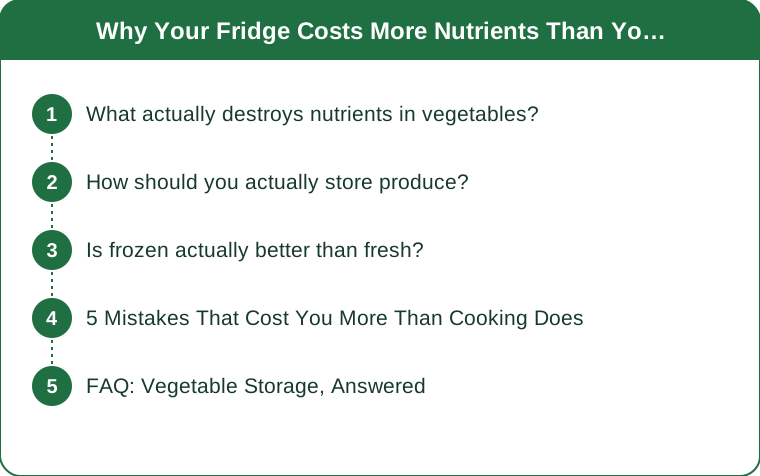
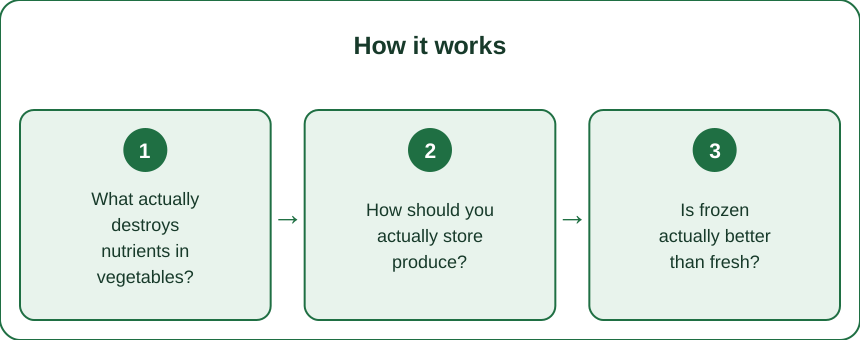
What actually destroys nutrients in vegetables?
Four things, and cooking is only one of them.
Time is the largest factor and the least discussed. Vitamin C and folate in particular begin declining at harvest and keep declining. Spinach can lose a substantial share of its vitamin C within a week of refrigerated storage, before it ever meets a pan.
Temperature accelerates everything. Enzymatic breakdown continues after harvest and runs faster when warm. Vegetables left on a counter lose nutrients considerably faster than the same vegetables refrigerated.
Light degrades several vitamins directly. Riboflavin and folate are both light-sensitive, which is why clear packaging under bright supermarket lighting is not doing produce any favours.
Cut surfaces expose everything to oxygen. Pre-cut vegetables lose vitamins substantially faster than whole ones, because oxidation happens at every exposed surface. This is the main real cost of the convenience of pre-chopped produce.
Cooking is a single event, and its effect depends heavily on method. Boiling leaches water-soluble vitamins into the water, and if you discard that water, that is where they go. Steaming, roasting, stir-frying, and microwaving all lose far less.
And cooking gives some things back. Heat improves the availability of lycopene in tomatoes and beta-carotene in carrots, and it breaks down cell walls so your body can access more of what is inside. Raw is not automatically better.
How should you actually store produce?
By category, because the same fridge kills some vegetables and preserves others.
Refrigerate almost everything green. Leafy greens, broccoli, green beans, courgettes, and herbs other than basil all keep far better cold. Greens are the fastest to lose nutrients, so they benefit most.
Keep tomatoes, potatoes, onions, garlic, and winter squash out of the fridge. Cold damages tomato texture and flavour, converts potato starch to sugar, and encourages sprouting in onions and garlic.
Store whole rather than cut whenever possible. Cutting starts oxidation at every surface. If you prep in advance for convenience, that is a reasonable trade, and it is worth knowing there is a cost.
Use the crisper drawers properly. They control humidity, and the settings matter. High humidity for leafy greens and things that wilt; low humidity for fruit and anything that rots.
Keep ethylene producers apart from ethylene-sensitive produce. Apples, bananas, tomatoes, and avocados release ethylene, which ripens and then spoils nearby greens, broccoli, and cucumbers much faster.
Wrap greens in a dry cloth or paper. Excess moisture accelerates rot and dry air causes wilting. A cloth in the bag manages both, and it roughly doubles the useful life of most leafy greens.
And buy in smaller quantities more often if you can. This is more effective than any storage technique. A big weekly shop guarantees that some of it will be eaten at day seven, which is exactly when it is worth the least.
Is frozen actually better than fresh?
Frequently yes, and the reason is timing rather than the freezing itself.
Frozen vegetables are processed within hours of harvest. They are blanched briefly and frozen at peak, which locks in nutrient content at close to its highest point.
Fresh produce is often days or weeks past harvest by the time you cook it. Transport, distribution, shelf time, and your fridge all add up. Produce that travelled a long distance and then sat in your drawer can easily be worse nutritionally than the frozen equivalent.
Blanching costs a small amount up front. A short amount of water-soluble vitamin loss happens during blanching, and it is generally smaller than what a week of storage costs.
Frozen has no waste, which matters more than people admit. The healthiest vegetable is one you actually eat. A bag of frozen peas that gets used entirely beats fresh produce where a third goes in the bin.
Texture is the real limitation, not nutrition. Frozen vegetables are poor raw and in salads and excellent in anything cooked. Use fresh for texture-critical uses and frozen for everything else.
And this is the sensible compromise. Buy fresh for the next two or three days, keep frozen for the rest of the week, and stop treating frozen as a lesser option.
Late summer is the one time of year the calculation flips. Local produce in season has travelled a short distance and is only days from harvest, which is genuinely different from imported produce in February. This is the best few weeks of the year for fresh, and it is worth using them.
5 Mistakes That Cost You More Than Cooking Does
1. Doing one big shop and eating produce across nine days. Whatever you eat on day eight has lost far more than any cooking method would take. Two smaller shops, or fresh early in the week and frozen later, solves it.
2. Washing and cutting everything on arrival. It feels organised and it starts the oxidation clock on all of it at once. Wash and cut as you use.
3. Storing tomatoes in the fridge. Cold damages both texture and flavour, and tomatoes are one of the few things that genuinely keep better at room temperature.
4. Discarding cooking water. If you boil vegetables, the water-soluble vitamins are in the water. Use it in a sauce, a soup, or a stock, or use a method that does not involve submerging them.
5. Keeping bananas and apples in the same bowl as everything else. They release ethylene, which quietly ages every neighbour. A separate bowl costs nothing and extends everything else by days.
And the one that surprises people: microwaving is one of the best cooking methods for nutrient retention, not one of the worst. Short cooking time and very little water is exactly the combination that preserves water-soluble vitamins, and it beats boiling comfortably.
FAQ: Vegetable Storage, Answered
Does cooking destroy vegetable nutrients?
Some, and less than storage usually does. Boiling leaches water-soluble vitamins into the water, while steaming, roasting, and microwaving lose far less. Cooking also increases the availability of some nutrients, including lycopene and beta-carotene.
Are frozen vegetables as good as fresh?
Often better, because they are frozen within hours of harvest while fresh produce may be days or weeks old by the time you eat it. Fresh wins in season and locally grown, and for anything eaten raw.
How long do vegetables keep their nutrients in the fridge?
It varies by vegetable, and leafy greens decline fastest, losing a meaningful share of their vitamin C within a week. Root vegetables and squash hold up far longer. Buy greens in smaller quantities more often.
TL;DR:
- Nutrient loss is driven by time, temperature, light, and cut surfaces, and a week in the fridge exposes produce to all four.
- Cooking causes one sharp loss and stops; storage causes a slow loss that continues for as long as it sits there.
- Refrigerate greens, keep tomatoes and potatoes out, store whole rather than cut, and separate ethylene producers.
- Frozen is frozen within hours of harvest and frequently beats week-old fresh. Use fresh in season and for anything raw.
Buying less more often beats every storage trick. Late summer is the one time of year fresh local produce genuinely wins on all counts.
Keep Reading
This article is for general informational purposes only and is not medical advice. Always consult a qualified health professional for guidance specific to you.