Autumn Roots Cover More of the Rainbow Than They Look Like
Quick Answer: Autumn’s palette looks narrower because the pigments moved from the surface to the interior. Purple carrots, red beets, orange squash, and even pale roots like parsnip and celeriac carry distinct phytonutrient classes. Buying five root types instead of five summer colors covers nearly the same ground.
The market in July was every color at once.
The market in October is orange, beige, and one lonely bunch of chard, and the rainbow rule suddenly feels like it was written for a different season.
Does autumn produce really have less color variety?
Less on the outside. Not much less inside.
Pigment moved to storage tissue. Summer produce carries color in skin and flesh exposed to light. Root vegetables store their pigments underground in the parts we eat, so the color is there — it is simply not visible until you cut them.
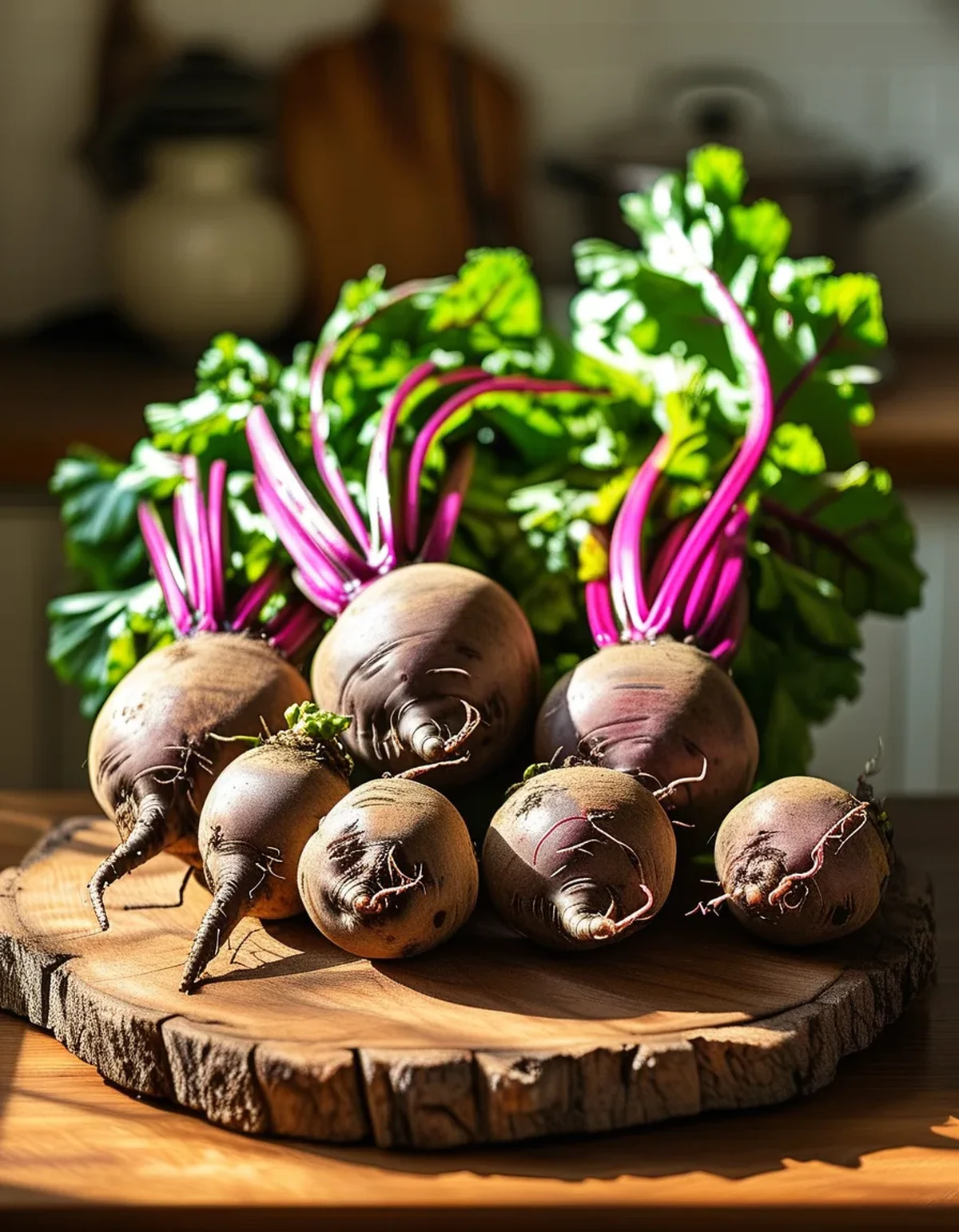
Roots concentrate different pigment classes. Beets carry betalains, a pigment family that summer produce mostly lacks and that behaves quite differently from the anthocyanins in berries. Autumn is the only season most people encounter them at all.
Orange in autumn is a different orange. Winter squash and sweet potato are dense in alpha and beta carotene, generally at higher concentrations than summer’s orange produce. Fewer items, more per item.
White and pale vegetables are the season’s blind spot. Parsnip, celeriac, turnip, cauliflower, garlic, and onion carry sulfur compounds, quercetin, and allicin — real, distinct phytonutrient groups that get skipped because they do not photograph as a color.
Brassicas peak now. Kale, cabbage, Brussels sprouts, and cauliflower are at their best in cool weather and carry glucosinolates, a class largely absent from summer’s tomatoes and berries. The season swapped one group for another rather than reducing the total.
What should an autumn rainbow plate actually contain?
Aim for pigment classes rather than visible colors.
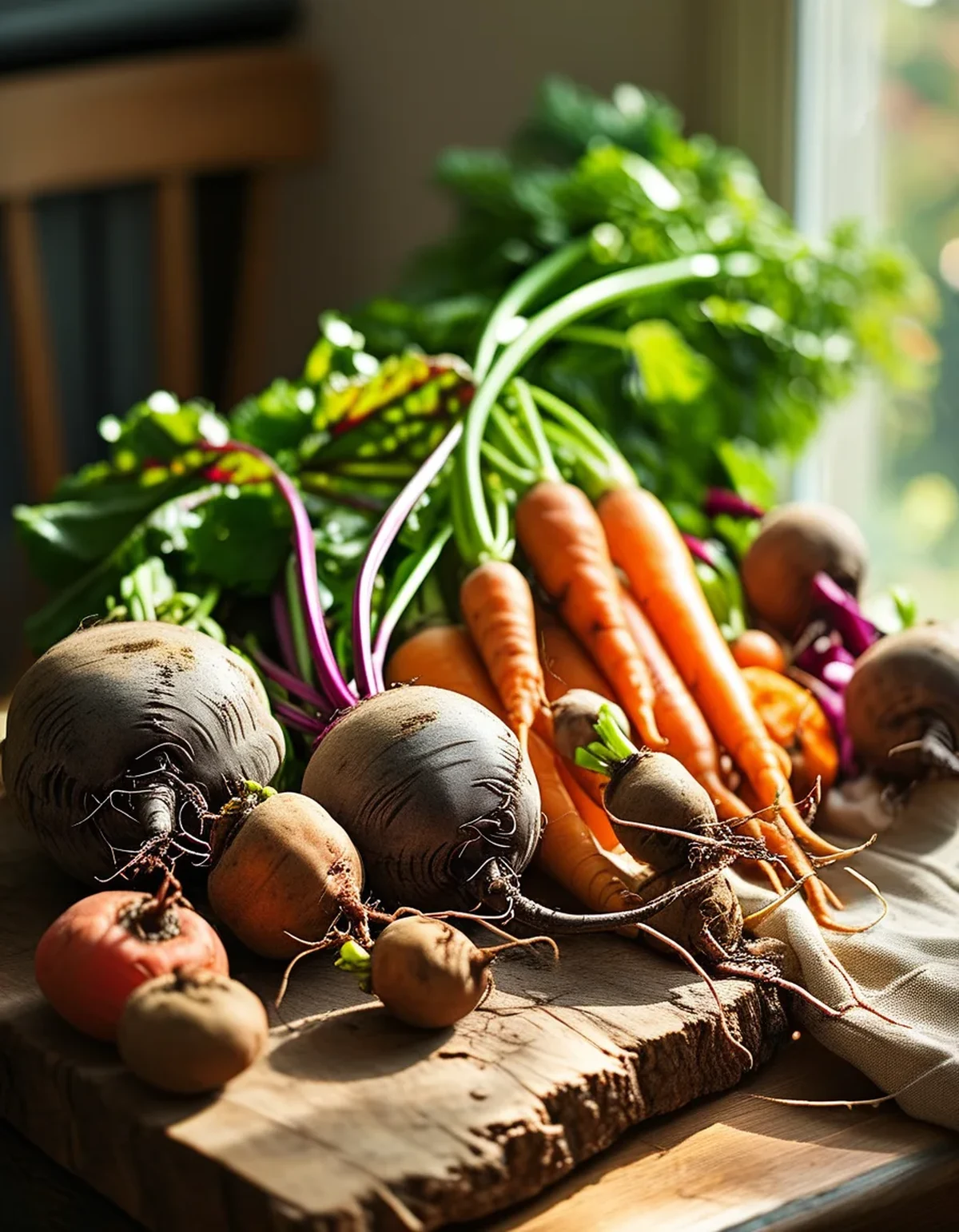
Deep orange: winter squash, sweet potato, carrot. Carotenoids, and fat-soluble — roast with oil or add fat at the table. Absorption roughly triples with fat present, which makes cooking method a bigger factor than portion size here.
Red to purple: beets, red cabbage, purple carrots, purple sweet potato. Betalains in beets, anthocyanins in the others. Two different families that both look purple, which is a good argument for eating both rather than picking one.
Dark green: kale, chard, Brussels sprouts, broccoli. Lutein, folate, and glucosinolates. Cooler weather actually improves the flavor of these as the plants convert starch to sugar against frost.
White and pale: garlic, onion, leek, parsnip, celeriac, cauliflower. Organosulfur compounds and quercetin. The most reliably skipped category and the one that costs the most to skip.
Brown and tan: mushrooms. A separate kingdom with its own compounds, plus the only common food source of vitamin D when exposed to light. Autumn is when they are best and cheapest.
Myth vs Fact: The Autumn Rainbow
Myth: Summer produce is more nutritious than autumn produce. Fact: Different, not lesser. Autumn roots and brassicas are denser in several vitamin and mineral categories, and storage vegetables hold their nutrients far better than delicate summer produce does over the same number of days.
Myth: Cooking destroys the color nutrients. Fact: It depends on the compound. Heat reduces vitamin C and some B vitamins, and it substantially increases the availability of carotenoids and lycopene. Roasted squash delivers more usable carotenoid than raw squash, which is the opposite of the general assumption.
Myth: Pale vegetables do not count. Fact: Onions are among the richest common sources of quercetin, and garlic’s organosulfur compounds have no colorful equivalent. Judging by visible pigment systematically undervalues an entire useful category.
Myth: Frozen autumn vegetables are a compromise. Fact: Frozen produce is processed within hours of harvest and often carries more nutrients than fresh produce that has spent a week in transit and three days in your fridge. For brassicas and peas specifically, frozen is frequently the better choice.
Myth: You need more variety in autumn to compensate. Fact: You need different variety, not more. Five well-chosen autumn vegetables across the pigment classes cover as much ground as eight summer ones — and the third item on that list, the pale one, is the one that usually goes missing.
How do you build it into actual autumn cooking?
The season’s cooking methods do most of the work if you let them.
Roast a mixed tray, not a single vegetable. Beets, squash, parsnip, and red onion on one sheet covers four pigment classes in one oven session. Cut to similar sizes and it is genuinely one dish.
Add fat where carotenoids are involved. Olive oil on squash and carrots is not a flavor decision. Without fat, you absorb a fraction of what is there.
Keep beets separate until serving if the color bothers you. Betalain bleeds and stains everything pink. It is harmless and it is why beets often get left out of mixed dishes.
Do not overcook the brassicas. Glucosinolate conversion depends on an enzyme that heat destroys. Lightly steamed or briefly roasted keeps far more of it than a long braise, and the texture is better anyway.
Use soup as the delivery vehicle for the pale ones. Leek, celeriac, parsnip, and onion are hard to eat as a side and effortless in a soup. This is how the missing category actually gets eaten in practice rather than in theory.
FAQ: Autumn Rainbow Eating, Answered
Is it harder to eat the rainbow in autumn?
It looks harder and is not much harder. The pigments moved indoors — into roots, squash, and brassicas — rather than disappearing. Buying five different root and brassica types covers a comparable spread of phytonutrient classes to a summer basket.
Do purple sweet potatoes and beets do the same thing?
No, and that is why both are worth eating. Purple sweet potatoes carry anthocyanins, the same family found in blueberries. Beets carry betalains, a distinct group with different chemistry. Similar color, different compounds.
Should I be eating more or fewer vegetables as it gets cold?
The same amount, prepared differently. Intake tends to fall in autumn because raw salads become unappealing, not because appetite changes. Roasting and soups keep the volume up in a form that suits the weather, and that is usually the whole fix.
TL;DR:
- Autumn’s pigments moved from skin to storage tissue — the variety is inside the vegetables rather than on the shelf.
- Cover pigment classes, not visible colors: orange carotenoids, red-purple betalains and anthocyanins, dark green brassicas, and pale organosulfurs.
- Add fat to carotenoid vegetables and avoid overcooking brassicas; both change absorption substantially.
- The pale category — onion, garlic, parsnip, celeriac — is the one that goes missing, and soup is how it comes back.
The market did not get less colorful. It just stopped showing you the color from the outside.
Keep Reading
This article is for general informational purposes only and is not medical advice. Always consult a qualified health professional for guidance specific to you.