Why the Color in Your Produce Fades in the Fridge, and What It Costs
Quick Answer: The pigments that give produce its color are often the nutrients themselves or close markers of them, so visible fading usually tracks real nutrient loss. Chlorophyll degrades with light, warmth, and time; anthocyanins in purple and red produce are sensitive to pH and heat; carotenoids in orange and red produce are relatively stable but degrade with oxygen exposure. Cold, dark, humidity-appropriate storage slows all three, and buying smaller amounts more often beats any storage trick.
The spinach you bought Sunday is a duller green by Thursday. That change is not cosmetic. Color and nutrition are more closely connected in produce than in almost any other food category.
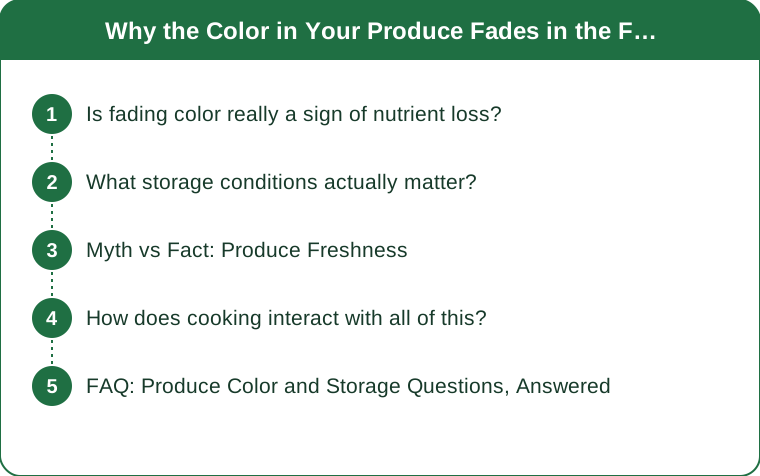
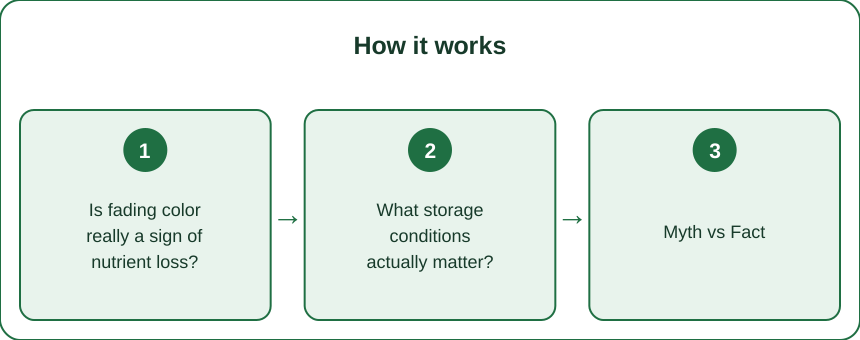
Is fading color really a sign of nutrient loss?
Often yes, though the relationship differs by pigment family, and it is worth being precise rather than sweeping.
Chlorophyll, the green pigment, is not itself a nutrient in the way vitamin C is, but its degradation tracks the same conditions that destroy vitamin C and folate: time, warmth, light, and oxygen. So while eating chlorophyll is not the goal, green produce turning yellow-green is a reliable visual proxy for a leaf that has been sitting.
Anthocyanins, the red-purple-blue pigments in berries, red cabbage, and purple carrots, are themselves the compounds of interest. They are antioxidants studied for cardiovascular and cognitive associations. When red cabbage turns bluish or dull, that is anthocyanin chemistry changing directly.
Carotenoids, the orange and red pigments in carrots, sweet potato, and tomatoes, are also the nutrients themselves and precursors to vitamin A. They are the most stable of the three, which is why a carrot holds its color for weeks while spinach does not.
Vitamin C deserves separate mention because it is the fastest to disappear and has no color at all. Leafy greens can lose a substantial share of their vitamin C within a week of refrigerated storage, and the loss is faster at warmer temperatures and with more light exposure.
The honest summary: fading color is a good general signal that a vegetable has been stored a while, and time in storage is the thing that costs you nutrition. The color is the messenger rather than always being the message.
What storage conditions actually matter?
Four variables, and most kitchens get two of them wrong.
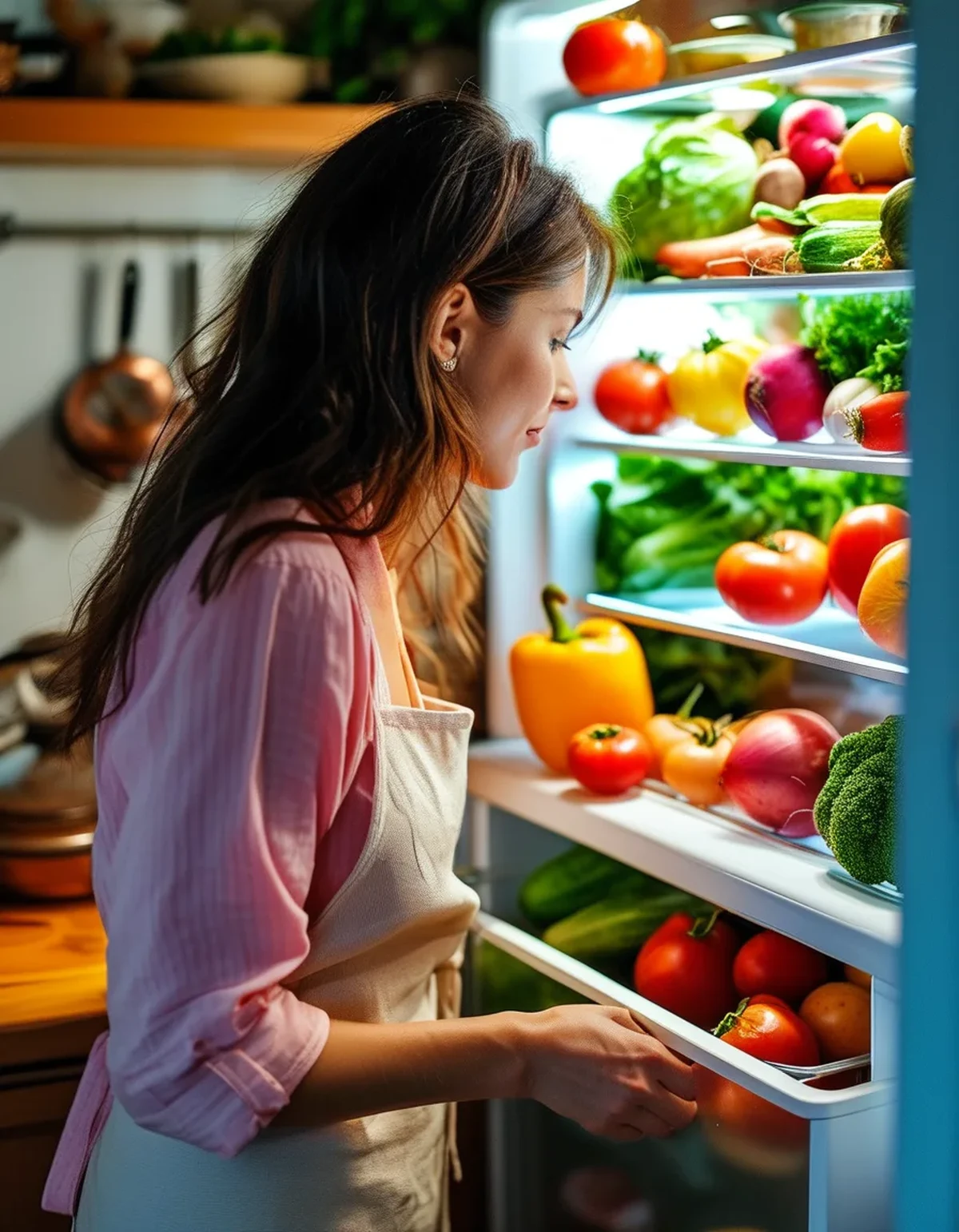
Temperature. Colder is better for most produce, and the difference between a 38F fridge and a 45F one is meaningful across a week. The exceptions matter though: tomatoes, basil, cucumbers, and most tropical fruit suffer chilling injury and are better on the counter.
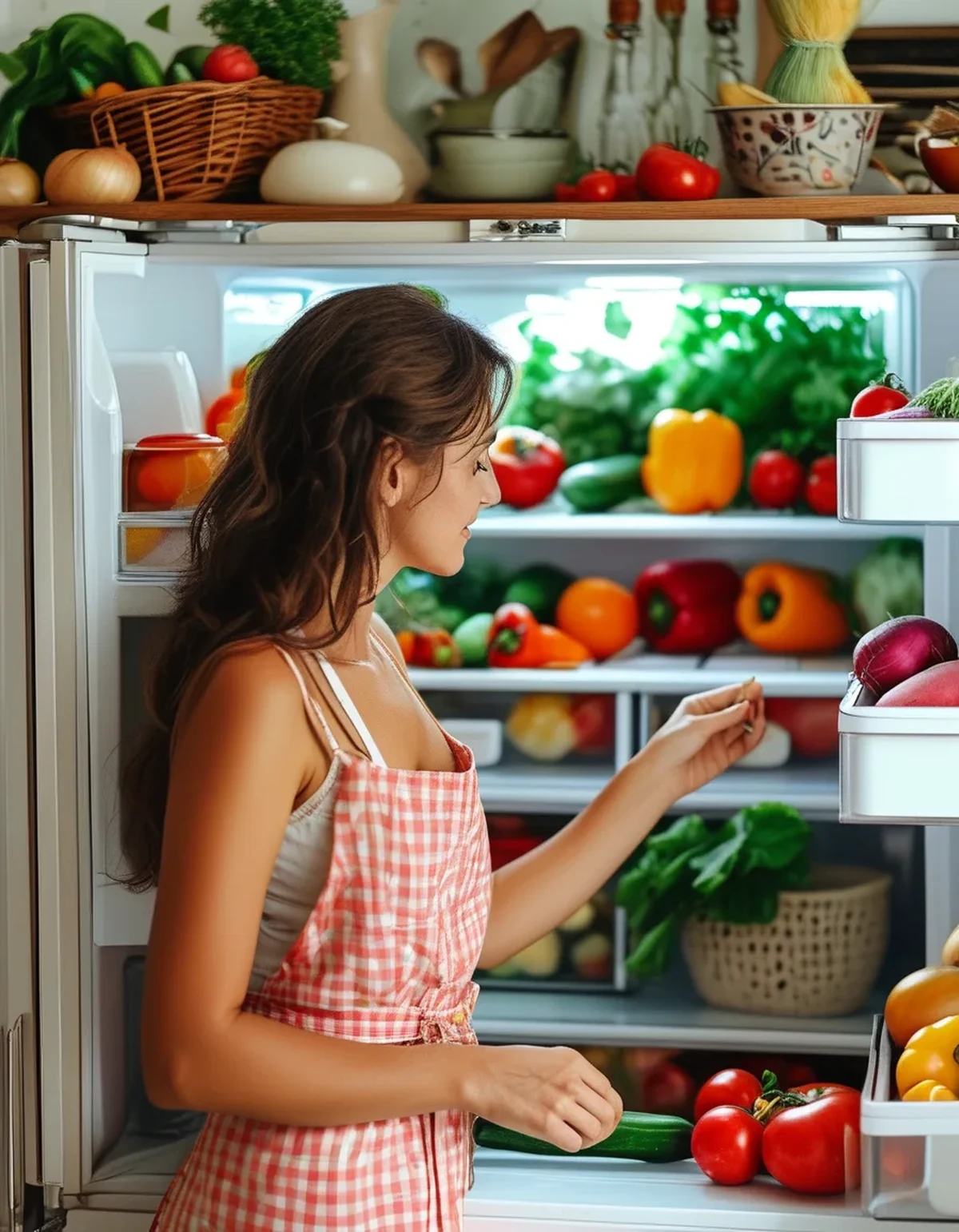
Humidity. This is the one most people ignore. Leafy greens and most vegetables want high humidity, which is what the crisper drawer with the vent closed provides. Most fruit wants lower humidity, vent open, because trapped ethylene and moisture accelerate ripening and mold. Two drawers, two settings, and most fridges have exactly this and almost nobody uses it deliberately.
Light. Refrigerator light is brief, but produce stored on the counter in daylight loses chlorophyll and riboflavin measurably faster. Potatoes in particular develop green solanine-containing patches with light exposure and should be kept dark.
Ethylene separation. Apples, bananas, avocados, and tomatoes emit ethylene gas, which accelerates ripening and senescence in everything nearby. Leafy greens and broccoli are particularly sensitive. Keeping the ethylene producers in a separate drawer or on the counter extends the life of the greens noticeably.
The fifth factor is simply time, and no storage strategy beats buying less more often. If a weekly shop is your reality, plan to eat the delicate greens in the first three days and the sturdy vegetables later in the week.
Myth vs Fact: Produce Freshness
Myth: Frozen vegetables are nutritionally inferior to fresh. Fact: frozen produce is typically picked at ripeness and blanched and frozen within hours, which locks in nutrients. Fresh produce that has spent a week in transit and a week in your fridge frequently contains less vitamin C than the frozen equivalent. Frozen is a legitimate primary option, not a fallback.
Myth: Washing produce when you get home extends its life. Fact: for most items it shortens it, because residual moisture accelerates microbial growth and decay. Wash immediately before eating, with the exception of berries, where a vinegar-water rinse followed by thorough drying can actually extend life.
Myth: Limp vegetables are spoiled. Fact: limpness is usually water loss, not spoilage. Many limp vegetables revive substantially in an ice water bath for 15 to 30 minutes, and the nutrition is largely intact. Slime, off smell, and mold are the actual spoilage signals.
Myth: The darkest-colored version is always the most nutritious. Fact: broadly true within a category, so darker leafy greens do generally outperform pale ones, but it does not transfer across categories. A pale cauliflower is not nutritionally inferior to a dark eggplant, they simply carry different compounds.
Myth: Storing produce in the original plastic bag is bad. Fact: perforated produce bags are engineered to balance humidity and gas exchange, and they usually outperform transferring everything to airtight containers, which trap moisture and accelerate rot.
The one that changes shopping habits: the nutrient clock starts at harvest, not at purchase. Local produce bought at a market three days after picking can substantially outperform imported produce of the same type bought the same day, purely on elapsed time. This is a real argument for seasonal and local buying that has nothing to do with flavor preferences.
How does cooking interact with all of this?
It cuts both ways, and the direction depends on which nutrient you are asking about.
Water-soluble vitamins, particularly C and the B group, are reduced by cooking, especially by boiling, where they leach into water that gets poured away. Steaming, microwaving with minimal water, and quick sauteing preserve substantially more.
Carotenoids become more bioavailable with cooking. Heat breaks down cell walls, releasing lycopene from tomatoes and beta-carotene from carrots into a form the body absorbs better. Cooked tomatoes deliver more usable lycopene than raw ones, which is a genuine and well-supported example of cooking improving nutrition.
Fat matters for the fat-soluble ones. Carotenoids, and vitamins A, D, E, and K, need dietary fat for absorption. A salad of colorful vegetables with a fat-free dressing delivers much less than the same salad with olive oil, and this is one of the most actionable facts in the whole area.
Anthocyanins are heat and pH sensitive. Red cabbage turns blue in alkaline conditions and stays vividly red with a splash of vinegar or lemon, which is a visible demonstration of the pigment chemistry changing. Some anthocyanin loss during cooking is unavoidable.
The practical conclusion is variety of preparation rather than a single correct method. Some vegetables raw, some steamed, some roasted, always with a little fat, and you cover the full range without needing to optimize any single meal.
This is general information, not medical or dietary advice for any specific condition.
FAQ: Produce Color and Storage Questions, Answered
How long do leafy greens really last?
Three to five days for delicate greens like spinach and arugula, seven to ten for sturdier ones like kale and collards, when stored cold with high humidity. Buying delicate greens for the first half of the week and sturdy ones for the second is a simple planning fix.
Does chopping vegetables in advance cost nutrition?
Some, yes. Cutting exposes surfaces to oxygen and enzymes, which degrades vitamin C and some antioxidants over hours to days. The loss is real but modest, and it is usually outweighed by the fact that pre-chopped vegetables actually get eaten.
Is a wilting vegetable safe to eat?
Generally yes, if there is no mold, slime, or off smell. Wilting is water loss. Revive in cold water, or use it in a soup or a stir fry where texture matters less.
TL;DR:
- Pigments are often the nutrients themselves, so visible fading generally tracks real nutrient loss
- Cold, dark, correct humidity, and separating ethylene producers slow it substantially
- Frozen produce often beats week-old fresh, and washing before storage shortens shelf life
- Cooking reduces vitamin C but increases carotenoid availability, and fat is required to absorb them
Set your crisper drawer vents this week: closed for greens, open for fruit. It takes ten seconds and buys you days.
Keep Reading
This article is for general informational purposes only and is not medical advice. Always consult a qualified health professional for guidance specific to you.