Why Some Color Nutrients Need Fat and Others Need Heat
Quick Answer: Color compounds fall into two broad groups with opposite requirements. Carotenoids — the orange, red, and dark green pigments — are fat-soluble and need dietary fat to be absorbed, and many become more available with heat. Water-soluble compounds like vitamin C and many B vitamins need no fat and are damaged by heat and by cooking water. A plate with both needs both treatments, which is why one universal cooking rule never works.
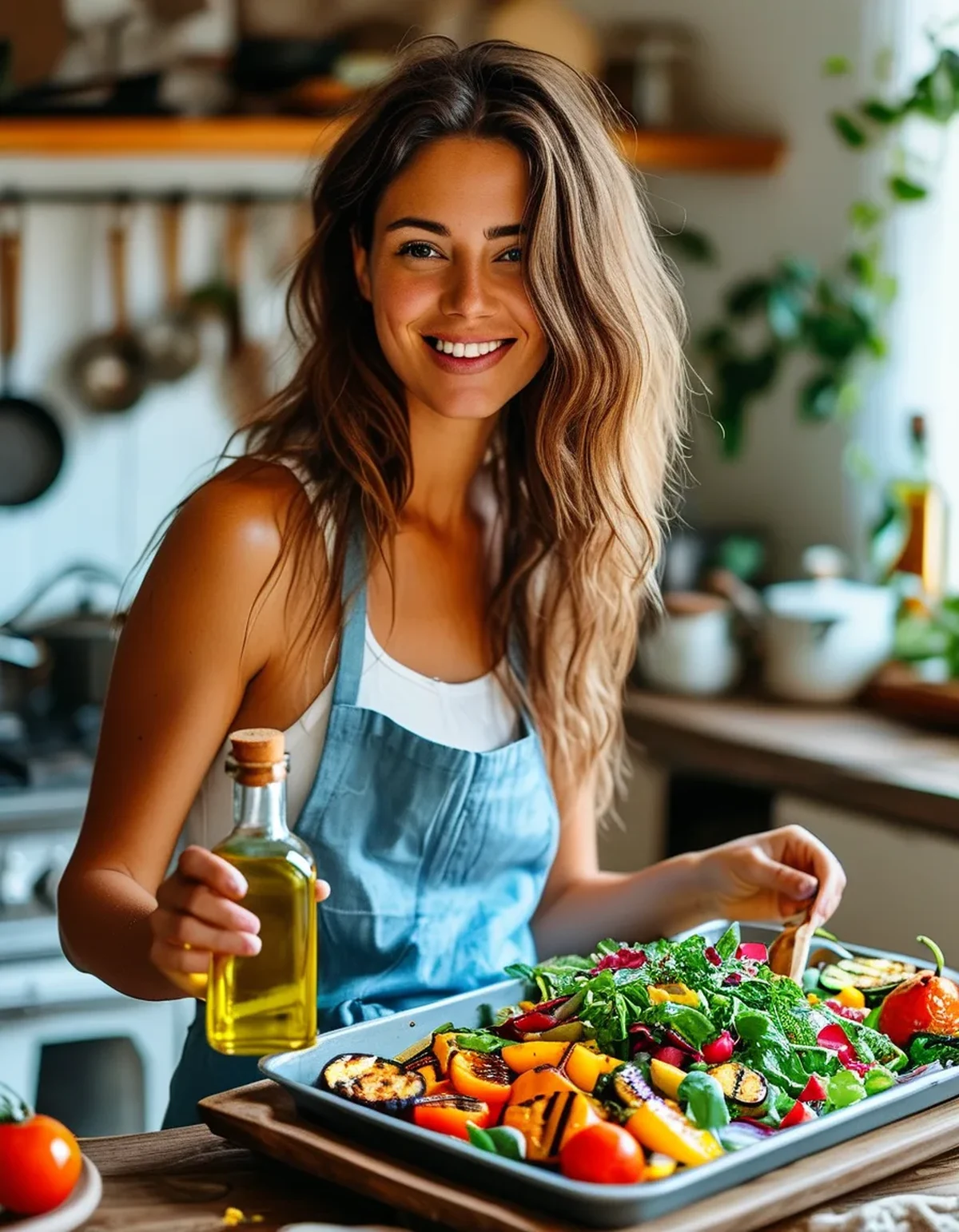
The practical version is simpler than it sounds: cook the orange and dark green things with fat, and eat the bright watery things raw or barely cooked.
Which colors need fat, and how much?
The carotenoid family, and less fat than you would think.
Carotenoids are the pigments behind orange, deep yellow, red, and much of the color in dark leafy greens. Beta-carotene in carrots and sweet potato, lycopene in tomatoes and watermelon, lutein and zeaxanthin in spinach and kale, and beta-cryptoxanthin in peppers and squash all belong to this group.
They are fat-soluble, which means they dissolve in fat and are absorbed through the same pathway as dietary fat. Without fat present in the meal, a substantial share passes through unabsorbed.
The research on this is unusually clear. Studies feeding salads with fat-free, reduced-fat, and full-fat dressings have found dramatically lower carotenoid absorption in the fat-free condition — in some measurements, negligible absorption of certain carotenoids without any fat at all.
The amount needed is modest. Roughly 3 to 5 grams of fat in the meal — about a teaspoon of oil, a quarter of an avocado, a small handful of nuts, or the fat in a whole egg — is enough to meaningfully improve absorption. Beyond a certain point more fat does not help further.
This is why the fat-free dressing era was nutritionally counterproductive. A large salad of spinach, carrot, tomato, and pepper with a fat-free dressing delivers a fraction of the carotenoids the same salad delivers with olive oil.
Whole-food fat works as well as added oil, and often better because it comes with its own nutrients. Avocado, nuts, seeds, cheese, or eggs alongside the vegetables all do the job.
Which colors need heat, and which are destroyed by it?
Heat helps carotenoids and hurts vitamin C and folate. They are frequently on the same plate.
Heat helps carotenoids by breaking down the plant cell walls and protein complexes that trap them. Raw carrot delivers considerably less available beta-carotene than cooked carrot, and cooked tomato delivers substantially more available lycopene than raw. This is the well-known tomato finding, and it holds across the carotenoid group.
So for orange, red, and dark green vegetables, cooking with a little fat is a double win — the heat releases the pigment, and the fat carries it across.
Heat hurts vitamin C and folate. Both are water-soluble and heat-sensitive. Vitamin C degrades measurably with cooking time and temperature, and both leach into cooking water. Boiling is the worst case, because it combines heat with a large volume of water that gets discarded.
The colors most affected are the ones people associate with freshness — bright green broccoli and peppers, citrus, berries, and raw leafy greens.
Anthocyanins, the blue and purple pigments in berries, red cabbage, and purple grapes, sit somewhere in between. They are water-soluble and reasonably heat-sensitive, and they also leach dramatically — anyone who has boiled red cabbage has watched the color leave the vegetable and enter the water.
The result is that the two rules genuinely conflict, and a single cooking method applied to a mixed plate always sacrifices something.
What Nobody Tells You About Absorption
Chopping and blending help more than most cooking. Breaking cell walls mechanically releases carotenoids without any heat damage to the vitamin C. A finely chopped raw salad delivers more of both than a coarsely chopped one.
The fat has to be in the same meal, not the same day. Absorption happens during digestion of that meal. A fat-free lunch salad followed by a fatty dinner does not retroactively rescue the lunch.
Steaming preserves more than boiling by a wide margin, because the vegetables never sit in water. If you do boil, using the liquid — in a soup, a sauce, a risotto — recovers most of what leached out.
Frozen vegetables often beat fresh for the heat-sensitive nutrients. They are blanched and frozen close to harvest, while fresh produce loses vitamin C steadily in transport and storage. A frozen pepper can genuinely have more vitamin C than a fresh one that has been in the fridge for a week.
Some vegetables are worth eating both ways. Tomato cooked for lycopene, tomato raw for vitamin C. Broccoli lightly steamed for vitamin C, broccoli in a stir fry with oil for the carotenoids and the fat-soluble vitamin K. Variety of preparation is as useful as variety of color.
Cutting long before eating costs you. Vitamin C oxidizes on cut surfaces. Prepping salad vegetables in the morning for an evening meal loses a meaningful share, which is one of the few genuine downsides of aggressive meal prep.
How do you build a plate that captures both?
By splitting the plate by treatment rather than by food group.
The cooked-with-fat side: orange, red, and dark green. Roasted carrots, squash, sweet potato, peppers, tomatoes, and sautéed spinach or kale. Cook these with olive oil or another fat. Moderate heat, and do not cook them to collapse — the carotenoid benefit is achieved well before the vegetable is overdone.
The raw or barely-cooked side: bright green, citrus, berries, and anything you value for vitamin C. Raw peppers, tomatoes eaten fresh, broccoli steamed briefly until it is bright green rather than olive green, berries untouched, citrus fresh.
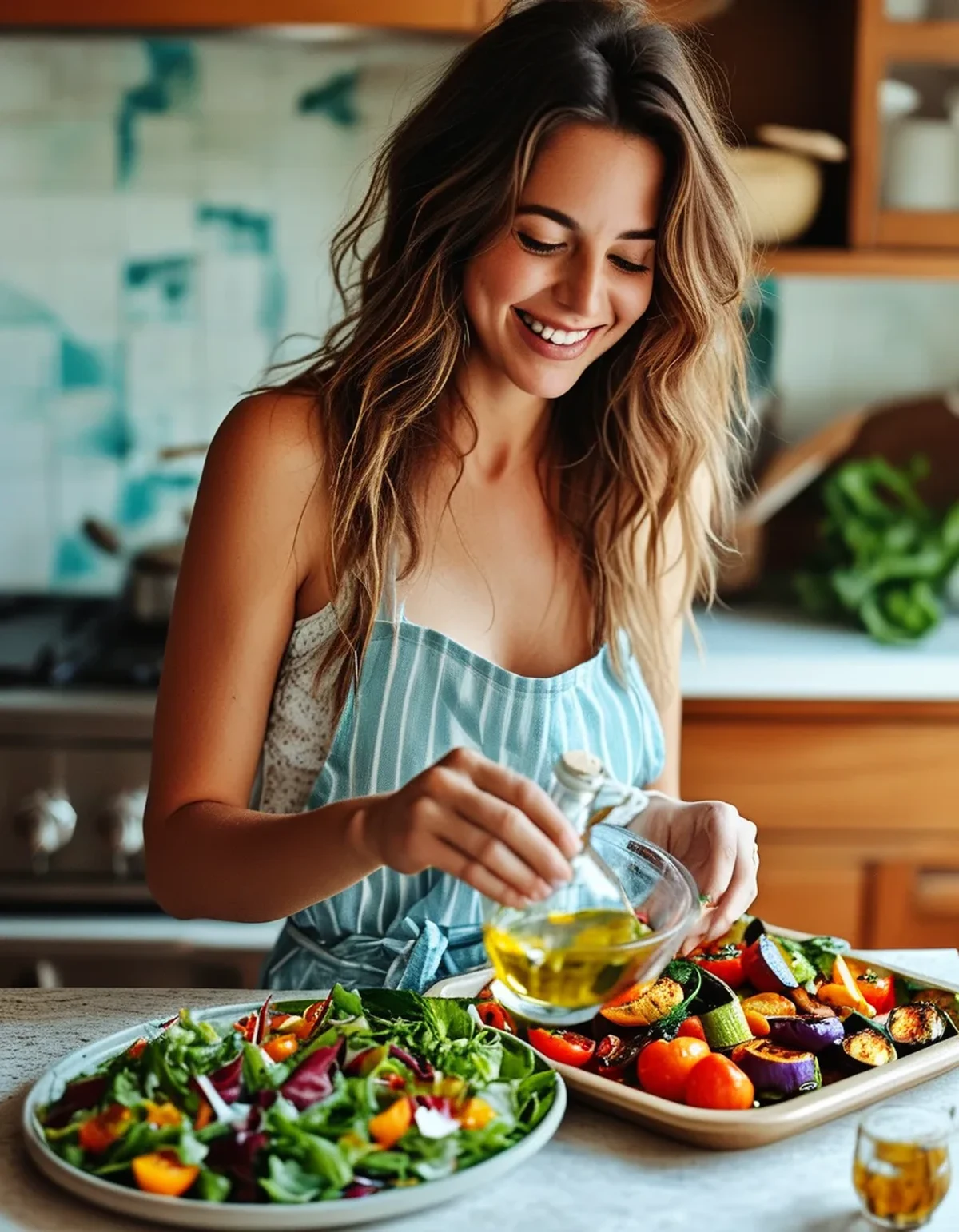
The fat carrier connects them. A dressing with olive oil, nuts or seeds scattered over, avocado, or cheese. One fat source serves the whole plate, which is why a single well-made dressing does more work than most people credit.
Keep the cooking water when you boil anything colorful. The color in the water is nutrients in the water.
Chop close to eating time for the raw components, and prep the roasting vegetables ahead instead if you need to prep something.
For late August specifically, this is the easiest month of the year to do well. Tomatoes, peppers, corn, summer squash, stone fruit, and berries are all at their peak simultaneously, which almost never happens. A plate right now can hit five or six color groups from a single market trip.
The seasonally smart move is to cook the tomatoes and peppers with oil — a simple roasted tray or a slow pan sauce — while eating the stone fruit and berries raw. That is the two-rule plate assembled from what is already in front of you.
This is general nutrition information, not medical advice.
FAQ: Nutrient Absorption Questions, Answered
How much oil is actually enough on a salad?
About a teaspoon of oil, or the equivalent in whole-food fat, is enough to substantially improve carotenoid absorption. Drenching a salad does not improve absorption further.
Does a smoothie count as breaking cell walls?
Yes, and effectively. Blending releases carotenoids well. Add a fat source — nut butter, seeds, full-fat yogurt — or you will lose much of what the blending released.
Should I stop boiling vegetables entirely?
Not necessarily, but use the water. Boiled vegetables where the liquid becomes soup or sauce retain nearly everything; boiled vegetables where the water goes down the drain lose the most of any common method.
Is raw always better for greens?
No. Spinach and kale deliver more carotenoids cooked with fat and more vitamin C raw. Eating them both ways across the week is the honest answer.
TL;DR:
- Carotenoids — orange, red, and dark green pigments — need dietary fat to absorb and become more available with heat.
- Vitamin C, folate, and anthocyanins are water-soluble, heat-sensitive, and leach into cooking water.
- Split the plate by treatment: cook the orange and dark green with fat, eat the bright and watery raw or barely cooked.
- About a teaspoon of fat serves the whole meal, and chopping close to eating time preserves the heat-sensitive side.
Late summer is the easiest month to do this well. Roast the tomatoes and peppers in oil, eat the fruit raw, and you have covered both rules without thinking about it.
Keep Reading
This article is for general informational purposes only and is not medical advice. Always consult a qualified health professional for guidance specific to you.