Why the Way You Cook Colorful Vegetables Changes Which Nutrients You Actually Absorb
Quick Answer: Some nutrients, like the carotenoids behind orange and red produce, actually become more absorbable when lightly cooked with a bit of fat, while other nutrients, like vitamin C in many green and some red produce, degrade with heat and are better preserved raw or lightly steamed — this means the ‘best’ cooking method genuinely differs by color category, not just by personal preference.
There isn’t one universally best way to cook vegetables for nutrition; the right method depends on which specific nutrients that color group is actually delivering.

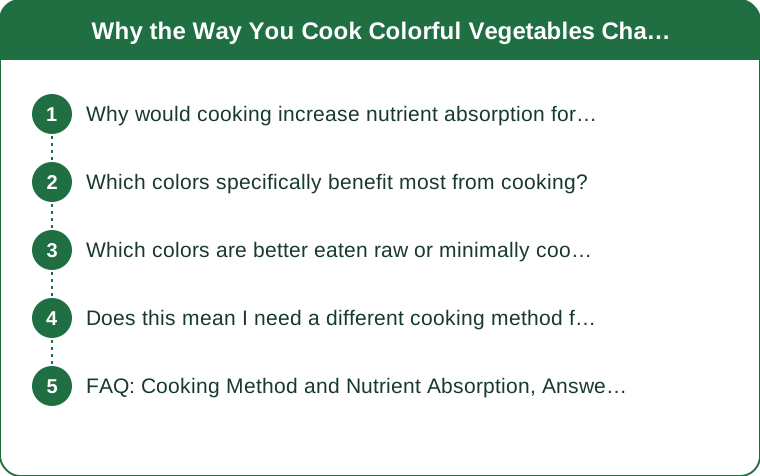
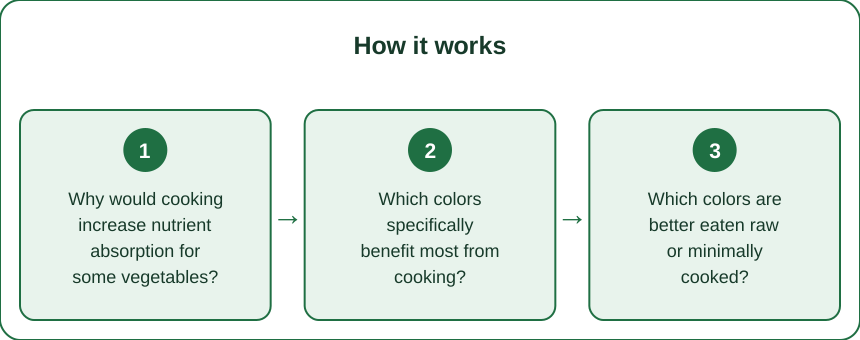
Why would cooking increase nutrient absorption for some vegetables?
Cooking breaks down plant cell walls that otherwise trap certain nutrients, and for fat-soluble compounds like carotenoids (beta-carotene, lycopene), heat plus a small amount of dietary fat significantly increases how much the body can actually absorb compared to eating the same vegetable raw.
Which colors specifically benefit most from cooking?
Orange and red produce rich in carotenoids — carrots, tomatoes, sweet potatoes — show notably increased nutrient absorption when cooked, particularly when paired with a bit of olive oil or another fat source that helps carotenoid absorption specifically.

Which colors are better eaten raw or minimally cooked?
Vitamin C-rich produce (many greens, bell peppers, berries) loses a meaningful portion of vitamin C content with prolonged heat exposure, since vitamin C is heat-sensitive, so raw or very lightly steamed preparation preserves more of this particular nutrient.
Does this mean I need a different cooking method for every single vegetable I eat?
Not to an impractical degree — a reasonable approach is roasting or lightly sautéing orange/red vegetables with a bit of fat, while keeping leafy greens and vitamin-C-dense produce more raw or briefly steamed, which covers the main distinction without requiring precise optimization for every item.
FAQ: Cooking Method and Nutrient Absorption, Answered
Does this mean raw vegetables are nutritionally inferior overall?
No — raw vegetables retain heat-sensitive nutrients well; it’s specifically fat-soluble compounds like carotenoids that benefit from cooking, so neither raw nor cooked is universally better across all nutrients.
Does adding fat matter as much as the cooking method itself?
Yes — for carotenoid absorption specifically, pairing with fat matters close to as much as the cooking method, since carotenoids are fat-soluble and need dietary fat present for full absorption.
Is frozen produce affected by this same cooking logic?
Yes, the same general principles apply to frozen produce once cooked, since freezing itself doesn’t significantly change how cooking method affects nutrient availability.
TL;DR:
- Carotenoid-rich orange and red produce absorb better when cooked with a bit of fat
- Vitamin C-rich produce loses more nutrients with heat, favoring raw or light steaming
- The best cooking method genuinely differs by which nutrients a color group delivers
- Roasting orange/red produce while keeping greens raw or lightly steamed covers the main distinction
Keep Reading
This article is for general informational purposes only and is not medical advice. Always consult a qualified health professional for guidance specific to you.