Why Cooking Changes Which Colors Your Body Actually Absorbs
Quick Answer: Heat breaks down plant cell walls, which releases fat-soluble pigments like lycopene and carotenoids and makes them substantially more absorbable - cooked tomatoes deliver far more usable lycopene than raw. But heat and water destroy vitamin C and some B vitamins, and prolonged boiling leaches water-soluble compounds into the cooking liquid. The practical rule: cook red and orange, keep some green raw, and add fat to anything you cook. Variety of preparation matters as much as variety of colour.
This is one of the few areas where the internet advice is genuinely split down the middle.
Both sides are right about different pigments.
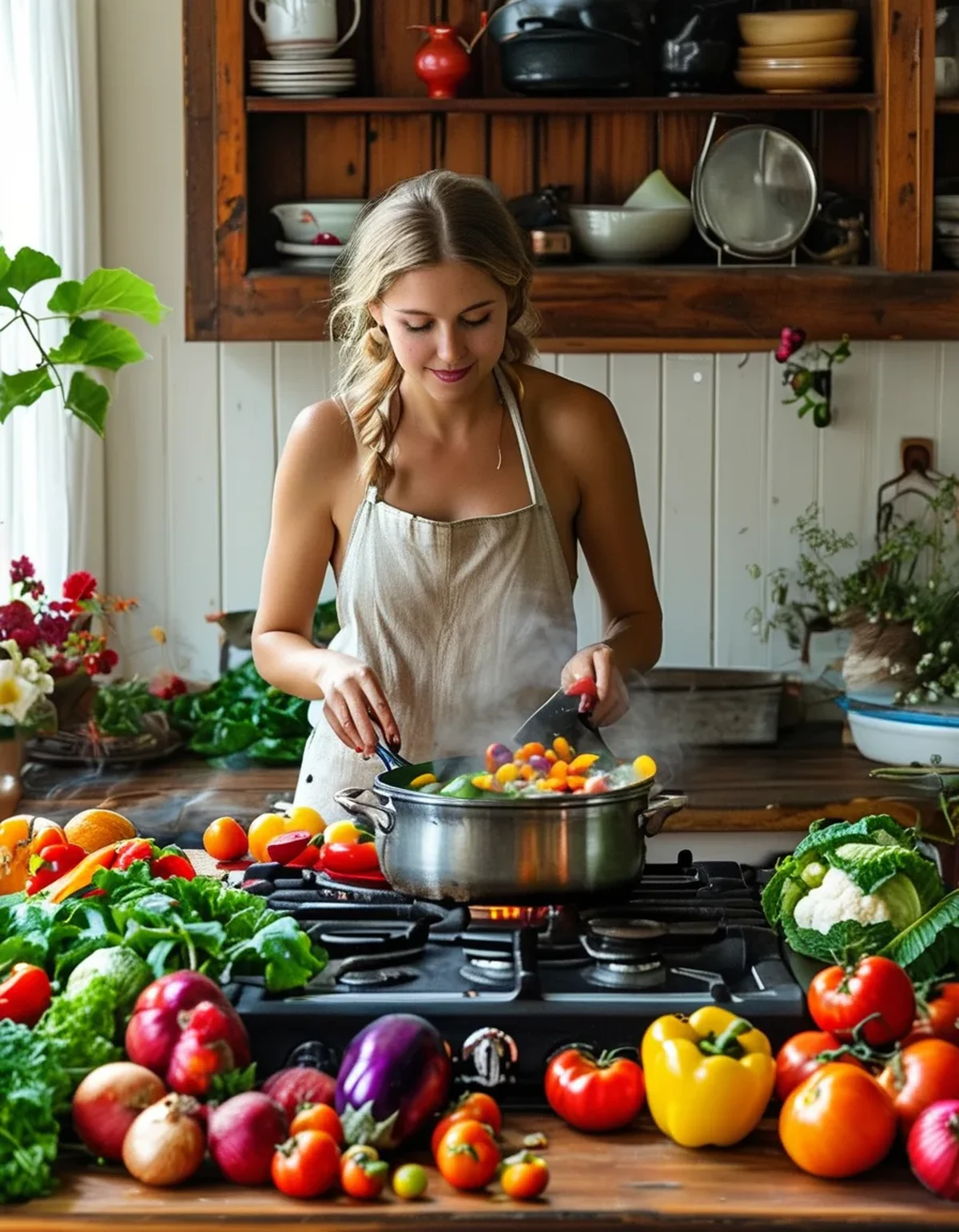
Which colours get better when cooked?
Red and orange, decisively - and the difference is not small.
Lycopene, the red pigment in tomatoes, is the clearest case. It is bound within the cell structure of the raw fruit, and heat breaks those structures down and converts lycopene into a form the body absorbs more readily. Studies on cooked tomato products consistently show substantially higher absorbable lycopene than raw tomatoes - the frequently cited figures put the increase at several-fold with sustained cooking.
Beta-carotene in carrots behaves the same way. Raw carrot cell walls are tough and resist digestion. Cooking softens them and releases the carotene, and absorption rises considerably. Cooking whole and then cutting retains more than cutting first, because less surface area is exposed.
Both are fat-soluble, which is the other half of the story. Carotenoids and lycopene require dietary fat for absorption. A tomato salad with olive oil delivers dramatically more usable lycopene than the same tomatoes without. This may be the single most actionable point here: fat is not optional for the red and orange group.
Some greens qualify too. Spinach releases more absorbable carotenoids when cooked, and cooking reduces the oxalate content that binds calcium and iron. Asparagus and mushrooms also become more nutritionally available with heat.
The unifying principle: pigments trapped inside plant cells need the cell wall broken. Heat does that. Chewing does some of it. Cooking plus fat does it best.
Which colours lose out to heat?
Anything driven by vitamin C and some B vitamins - and anything you boil for a long time.
Vitamin C is fragile in every direction. It is destroyed by heat, degraded by oxygen, and highly water-soluble. Boiling broccoli can reduce vitamin C content substantially, and much of what is lost ends up in the water rather than being destroyed outright.
Folate is similarly heat and water sensitive, which matters for leafy greens and legumes.
Glucosinolates in cruciferous vegetables are a nuanced case. Broccoli, cabbage, and kale contain compounds that convert into beneficial forms via an enzyme called myrosinase, and that enzyme is heat-sensitive. Heavy cooking deactivates it. Light steaming preserves much more of the conversion capacity than boiling.
Anthocyanins - the red-purple pigments in berries, red cabbage, and purple potatoes - leach readily into water. If your cooking liquid turns bright purple, that colour is the nutrient leaving the vegetable. Either use the liquid or use a method without water.
The practical divide, then, is not raw versus cooked but method versus method. Boiling is the biggest loser across the board. Steaming, roasting, sautéing, and microwaving all retain considerably more, because they involve less water, less time, or both.
Microwaving deserves a specific mention because its reputation is undeserved. Short cooking time and minimal water make it one of the better methods for nutrient retention, not one of the worst.
What does the practical version look like?
Sort your produce into three groups and cook each accordingly.
Group one - cook it, with fat. Tomatoes, carrots, sweet potato, squash, peppers, spinach, mushrooms, asparagus. These reward heat and require fat for absorption. Roast, sauté, or simmer, and always include olive oil, butter, avocado, or nuts.
Group two - eat some raw, cook some lightly. Broccoli, cabbage, kale, Brussels sprouts, and the rest of the cruciferous family. Light steaming for three to five minutes hits the useful middle, and eating some raw preserves the enzyme activity. Variety across the week is better than committing to one method.
Group three - raw or barely touched. Berries, citrus, peppers eaten for vitamin C, leafy salad greens, herbs. These deliver their main value in a form heat damages.
Then three method rules that apply across all groups. Use less water - steam rather than boil. Cook for less time - most vegetables are done well before people take them off the heat. Keep the liquid when you do use it, in a soup, sauce, or grain.
And cut later rather than earlier. More surface area means more exposure to oxygen, heat, and water. Roasting carrots whole or in large pieces retains more than dicing them small.
The single highest-impact habit: add fat to every cooked vegetable dish. Most people eating plenty of vegetables and no fat with them are absorbing far less than they think.
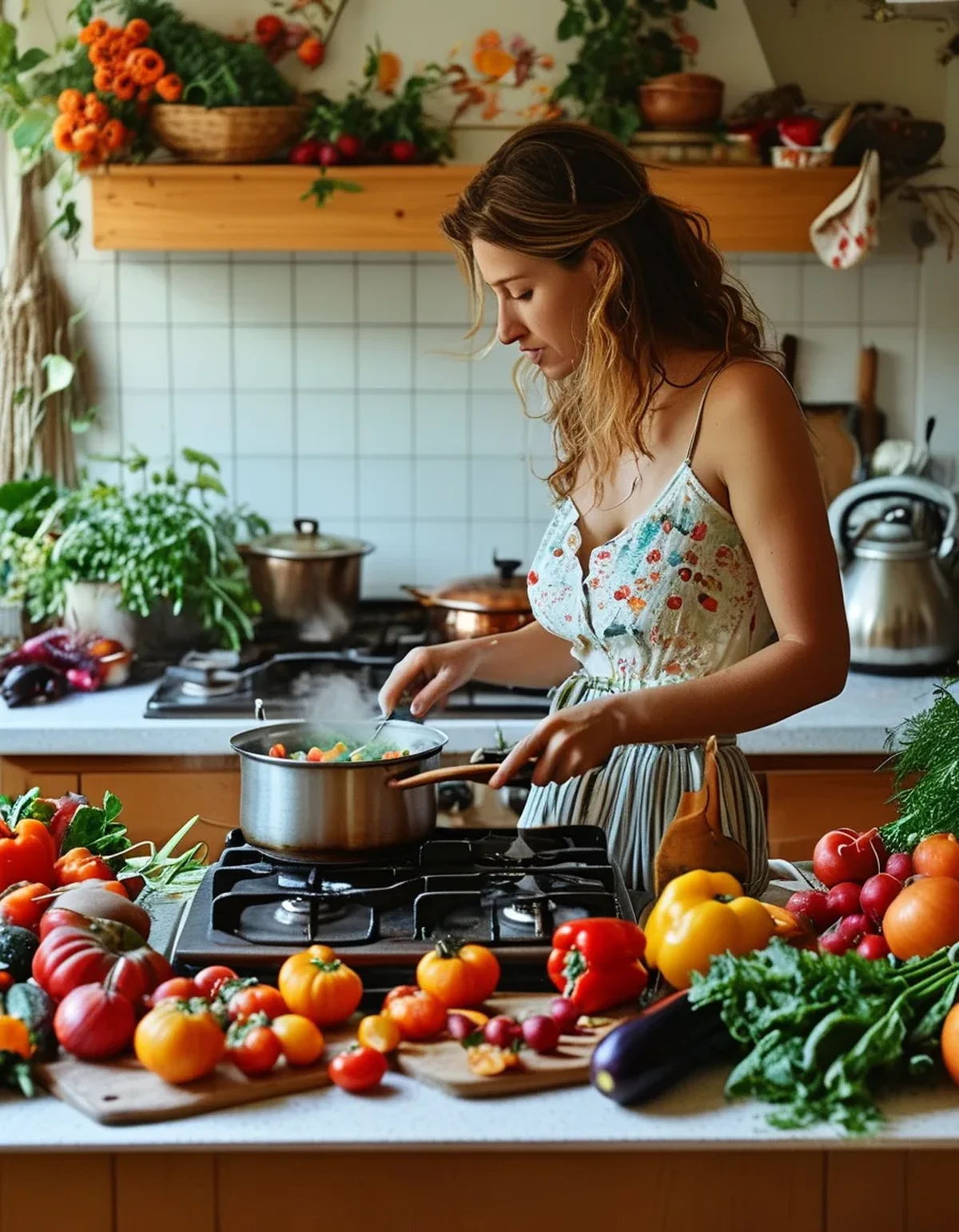
Myth vs Fact: Raw Versus Cooked
Myth: Raw food is always more nutritious. Fact: It depends entirely on the nutrient. Raw wins for vitamin C and folate; cooked wins decisively for lycopene and carotenoids. A diet of only raw is leaving a lot of red and orange nutrition on the table.
Myth: Microwaving destroys nutrients. Fact: Microwaving is among the better methods because the cooking time is short and little or no water is used. The reputation comes from nothing measurable.
Myth: Frozen vegetables are nutritionally inferior to fresh. Fact: Frozen is often equal or better, because vegetables are frozen shortly after harvest while fresh produce loses nutrients across days of transport and storage. Frozen spinach in February beats tired fresh spinach easily.
Myth: Boiling is fine as long as you cook briefly. Fact: Even brief boiling leaches water-soluble compounds. If you boil, use the water - in a soup, a sauce, or to cook grains.
Myth: You should eat the rainbow raw for maximum benefit. Fact: You should eat the rainbow with fat and with varied preparation. The colour advice is sound; the raw part is not.
Does late summer produce change the approach?
Yes - this is the peak season for the group that benefits most from cooking.
Tomatoes, peppers, corn, squash, and stone fruit are all at their best right now, and the red-orange group is exactly the group that rewards heat and fat. A late-summer roasting tray of tomatoes and peppers with olive oil is one of the most nutritionally efficient things you can cook, and it happens to be the cheapest it will be all year.
This is also the moment to cook for later. A large batch of roasted tomatoes or a tomato sauce made now, frozen, retains its lycopene well and gives you the benefit through the winter when good tomatoes cost three times as much and taste like nothing.
Peak-season produce needs less cooking to be good, which conveniently aligns with nutrient retention. A late-August tomato needs a quick blister in a hot pan; a February one needs an hour of roasting to develop any flavour at all.
For the raw group, this is their season too. Berries, salad greens, herbs, and cucumbers are at their peak vitamin C content when fresh and local. Eat them raw now and lean more on frozen versions later in the year.
And as the weather turns, your cooking naturally shifts toward the methods that suit the autumn group - roasting squash, simmering soups, braising greens. The seasonal instinct and the nutritional logic point the same direction, which does not always happen.
One practical late-summer habit: roast a large tray of mixed vegetables with olive oil twice a week. It covers the cook-with-fat group entirely, keeps for days, and takes ten minutes of active time.
FAQ: Cooking and Nutrition Questions, Answered
Does olive oil lose its benefits when heated?
At normal cooking temperatures, extra virgin olive oil holds up well and is a good cooking fat. Its role here is enabling absorption of fat-soluble pigments, which it does regardless. For very high-heat searing, a higher smoke point oil is more practical.
Is it better to steam or roast?
Steaming retains more water-soluble vitamins; roasting develops flavour and works well with the fat-soluble group. The genuine answer is to use both across the week rather than picking one.
How long can I keep cooked vegetables before nutrients drop?
Refrigerated and covered, three to four days is fine for both safety and reasonable nutrient retention. Vitamin C declines gradually, but the carotenoid and lycopene content is stable. Batch cooking is not a nutritional compromise.
TL;DR:
- Heat releases lycopene and carotenoids - cooked tomatoes and carrots deliver far more usable pigment than raw.
- Fat is required for absorbing the red and orange group. Vegetables without fat are partly wasted.
- Vitamin C, folate, and anthocyanins are damaged by heat and water - boiling is the worst method across the board.
- Steam, roast, sauté, or microwave; cut later rather than earlier; keep the cooking liquid.
- Late summer is peak season for the cook-with-fat group - batch roast and freeze for winter.
Roast a tray of tomatoes and peppers in olive oil this week. It is the highest-return cooking you can do right now.
Keep Reading
This article is for general informational purposes only and is not medical advice. Always consult a qualified health professional for guidance specific to you.