Why 'Eat the Rainbow' Advice Accidentally Skips an Entire Category of Vegetables
Eat-the-rainbow advice is genuinely useful, but taken literally it quietly excludes an entire category, white vegetables like garlic, onion, and cauliflower, that carry real nutritional value the colorful ones don’t fully cover.

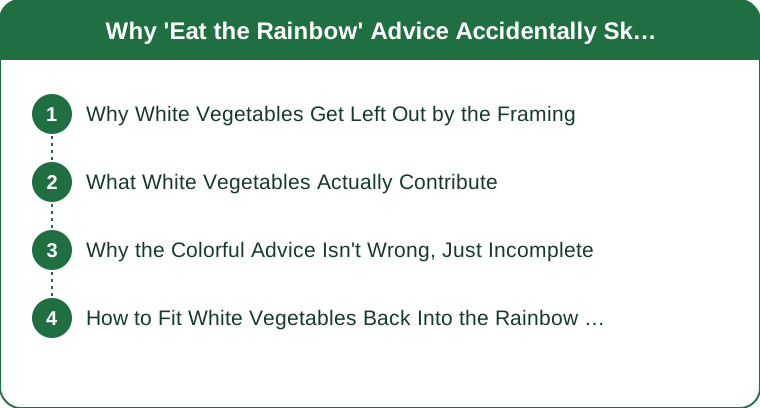
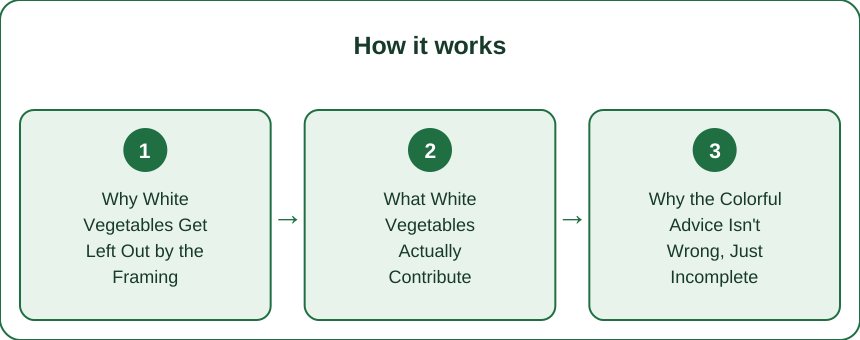
Why White Vegetables Get Left Out by the Framing
The framing problem: the rainbow metaphor implicitly treating white as the absence of color rather than its own category, which leads a lot of people applying the advice literally to unintentionally deprioritize onions, garlic, and cauliflower.
What White Vegetables Actually Contribute
The overlooked nutrients: allium vegetables like garlic and onion carrying sulfur compounds linked to cardiovascular and immune benefits that the more colorful pigmented vegetables, rich in different antioxidant classes entirely, don’t provide in the same way.

Why the Colorful Advice Isn’t Wrong, Just Incomplete
The nuance: colorful vegetables absolutely delivering valuable and distinct antioxidants like beta-carotene and anthocyanins, meaning the rainbow advice remains genuinely useful, it’s simply incomplete on its own rather than actively incorrect.
How to Fit White Vegetables Back Into the Rainbow Habit
The practical fix: treating white specifically as its own deliberate category alongside the colorful ones, and making sure garlic, onion, and cauliflower show up regularly, rather than assuming the colorful choices alone cover the full nutritional range, and the frame (white vegetables carry sulfur compounds and other benefits the colorful ones don’t, so eat-the-rainbow advice works best when white is treated as its own category rather than skipped as ‘no color’.)
Eat-the-rainbow advice is genuinely useful, but the rainbow metaphor implicitly treats white as the absence of color rather than its own category, which leads a lot of people applying the advice literally to unintentionally deprioritize garlic, onion, and cauliflower. Allium vegetables like garlic and onion carry sulfur compounds linked to cardiovascular and immune benefits that the more colorful pigmented vegetables, rich in different antioxidant classes entirely, don’t provide in the same way, which means the colorful advice isn’t wrong, it’s just incomplete on its own since colorful vegetables absolutely deliver valuable and distinct antioxidants like beta-carotene and anthocyanins. Treating white specifically as its own deliberate category alongside the colorful ones, and making sure garlic, onion, and cauliflower show up regularly, closes that gap rather than assuming the colorful choices alone cover the full nutritional range.
Keep Reading
This article is for general informational purposes only and is not medical advice. Always consult a qualified health professional for guidance specific to you.