Smoothies by Color: Drinking the Rainbow One Blend at a Time
Quick Answer: Color-coded smoothies group ingredients by pigment family — purple berries, green leafy-and-mango, and golden pineapple-carrot-turmeric — so that rotating through the colors across the week naturally rotates through different plant nutrients too. Batch-prepping freezer packs by color turns the whole system into a five-minute daily habit.
The “eat the rainbow” advice sounds nice in theory and dies the moment real life shows up. Somewhere between the grocery list and the actual Tuesday, it usually collapses into the same three vegetables on repeat. Color-coded smoothies are the laziest possible way to actually follow through on it.
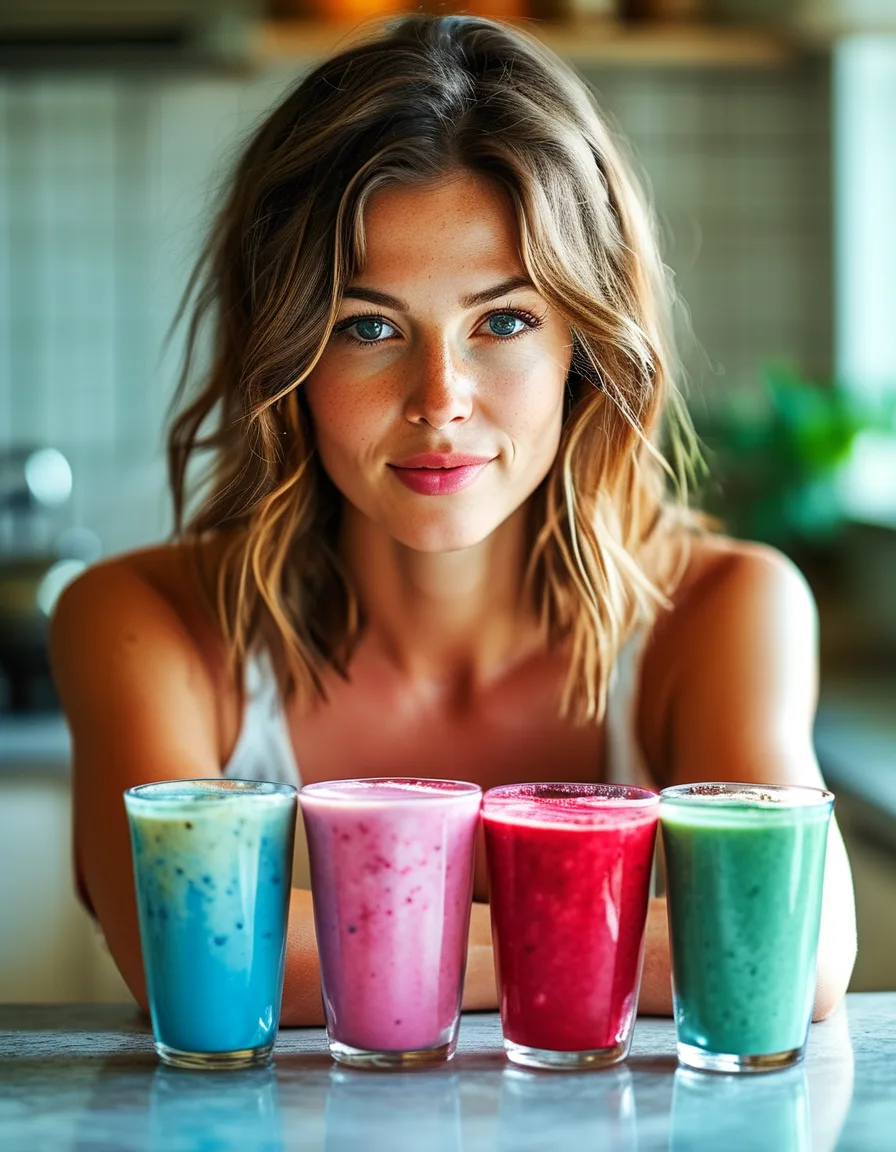
What does it mean to “drink the rainbow”?
The idea behind eating a range of produce colors is that different pigments tend to travel with different plant compounds — the reds, purples, greens, and oranges in fruits and vegetables aren’t just for looks. Turning that into a blender routine means picking a handful of go-to smoothie combinations, each built around one color family, and rotating through them instead of defaulting to the same blend every morning.

What goes into a purple smoothie blend?
The purple blend is the easiest entry point and often becomes the default morning go-to. It’s built from frozen blueberries, blackberries, banana, and yogurt — the classic anthocyanin-rich combination that berry research tends to circle back to. It’s also strategically useful beyond nutrition: purple is dark enough to hide almost any other ingredient you sneak in, which the next blend on this list takes full advantage of. A small handful of oats or a spoonful of nut butter blended in also turns it from a snack-sized drink into something that holds you until lunch.
How do you make a green smoothie that doesn’t taste like a green smoothie?
This is where spinach earns its reputation as the most underrated smoothie ingredient there is. Spinach is close to flavor-invisible once blended, but it’s pigment-dominant, meaning it does its coloring job without doing much to the taste. Combine it with:
- Frozen mango (the flavor workhorse)
- A scoop of protein powder or yogurt
- Water or coconut water to thin it out
The result tastes like straight mango and photographs like pure virtue. Kale is an option for the more committed green-smoothie crowd, but honestly, the mango forgives almost anything you throw in with it.

What’s in a golden or orange smoothie blend?
The golden afternoon blend leans into carotenoid-rich produce and a little warmth: frozen pineapple, carrot, a knob of ginger, a pinch of turmeric, and yogurt to bring it all together. It’s the carotenoid-and-ginger combination with an anti-inflammatory-leaning guest list, and it tastes closer to a tropical juice bar order than anything resembling a health drink. Functionally, though, it’s doing the orange team’s group photo — carrots and pineapple carrying most of that golden color.

Why does rotating smoothie colors matter more than picking one “best” smoothie?
This is really the entire point of the system. Weekly variety is the actual goal, not any single blend being superior to the others — rotating through purple, green, and gold across the week captures a wider range of pigment families than a single-favorite-smoothie habit ever manages, no matter how “healthy” that one favorite is. The trick that makes rotation sustainable is batching: pre-portioning freezer bags by color on a Sunday, so grabbing “today’s color” and hitting blend is the entire morning decision.
What Nobody Tells You About Color-Coded Smoothies
Nobody tells you that the color system works partly because it’s genuinely fun, and fun habits survive longer than disciplined ones. Nobody tells you that pre-portioned freezer bags are what actually make this sustainable — without them, “rotating colors” quietly turns back into “whatever’s in the fridge.” Nobody tells you that yogurt or a protein source in each blend is what keeps it from being a sugar bomb disguised as health food. And nobody tells you that you don’t need all three colors every single day — even hitting two or three colors across a week beats one color every day, easily.
FAQ: Color-Coded Smoothie System
How many different colored smoothies should I make in a week?
Rotating through all three — purple, green, and gold — across the week is the goal, but there’s no strict daily quota. Even alternating between two or three colors instead of one repeated blend captures meaningfully more variety than a single-favorite habit.
Can I prep smoothie ingredients ahead of time?
Yes, and it’s honestly the part that makes the whole system stick. Pre-portioning each color’s ingredients into labeled freezer bags on a weekend turns each morning’s decision into “grab a bag and blend” rather than chopping and measuring from scratch.
Do color-coded smoothies need added protein?
It’s a good idea to include yogurt, a protein powder, or another protein source in each blend. It helps balance out the natural sugars in the fruit and keeps the smoothie more filling as an actual meal or snack rather than just a fruit drink.
TL;DR:
- Color-coded smoothies group ingredients by pigment family: purple, green, and gold
- Purple (berries, banana, yogurt) is the easy default morning blend
- Green (spinach, mango, protein, water) hides vegetables behind mango flavor
- Gold (pineapple, carrot, ginger, turmeric) leans tropical with an anti-inflammatory edge
- Batch-prepped freezer packs by color are what make weekly rotation actually sustainable
Keep Reading
This article is for general informational purposes only and is not medical advice. Always consult a qualified health professional for guidance specific to you.