Why 'Eat the Rainbow' Isn't Really About Color — It's About This
Quick Answer: Color isn’t the nutrient — it’s a visible marker for different phytonutrient families (carotenoids, anthocyanins, chlorophyll). Eating a color range gets you compound diversity, which single-nutrient thinking (“eat more vitamin C”) misses entirely.
You’ve heard “eat the rainbow” a hundred times, usually next to a cute chart with five color categories. But nobody explains why color tracks nutrition, so it feels like a gimmick you can safely ignore. It’s not — the mechanism underneath is actually one of the more solid ideas in nutrition advice.

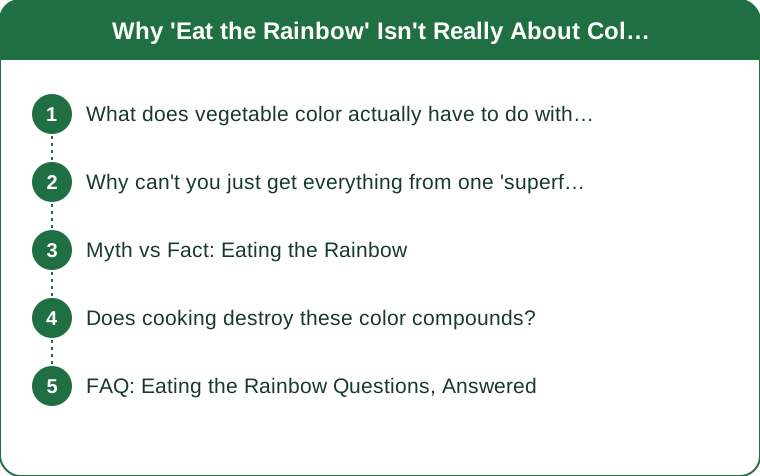
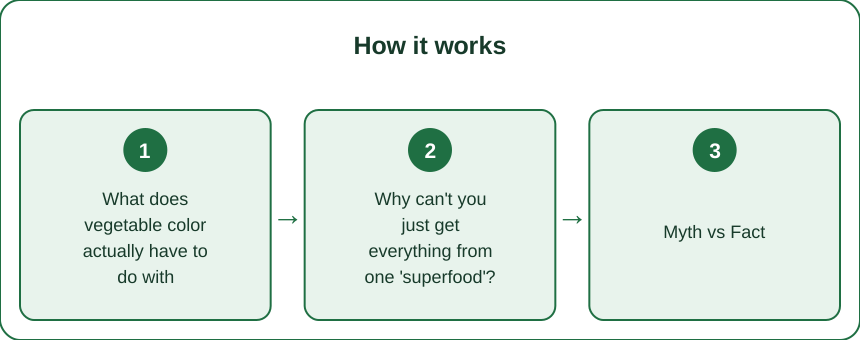
What does vegetable color actually have to do with nutrients?
Plant pigments are the same molecules doing the nutritional work — they’re not decoration sitting on top of nutrients, they are nutrients or their close cousins.
Orange and yellow come from carotenoids (beta-carotene, lutein). Red and purple come from anthocyanins, a different antioxidant family entirely. Green comes from chlorophyll plus a separate set of compounds (indoles, sulforaphane precursors) that colorless-looking produce doesn’t carry.
Different color = different chemical family = different job in the body. That’s the whole trick.
Why can’t you just get everything from one ‘superfood’?
Because no single plant makes every pigment family — that’s not a flaw, it’s just plant biology. A diet of only blueberries gets you deep into anthocyanins and essentially zero carotenoids.
This is the actual argument for variety: breadth beats intensity. Five different colored vegetables in modest amounts outperforms one “superfood” vegetable eaten in bulk, because you’re covering more compound families instead of maxing out one.

Myth vs Fact: Eating the Rainbow
Myth: White and brown produce (garlic, mushrooms, cauliflower) don’t count. Fact: They carry their own compound families — allicin in garlic, beta-glucans in mushrooms — that colorful produce doesn’t have. “Rainbow” should really include white/brown as a category.
Myth: You need to hit all 5 colors every single day. Fact: The research behind color diversity looks at weekly patterns, not daily perfection. Rotating colors across a week works just as well as forcing all five onto one plate.
Myth: Juicing preserves the benefit. Fact: Juicing strips fiber and can degrade heat- and light-sensitive pigments like anthocyanins. Whole or lightly cooked produce keeps more of the actual compound intact.
Does cooking destroy these color compounds?
It’s mixed, not a flat yes or no. Carotenoids (orange/yellow) actually become more absorbable when lightly cooked with a little fat — tomato sauce beats raw tomato here.
Anthocyanins (red/purple) and vitamin C are more heat-sensitive — raw or lightly steamed preserves more. There’s no single rule; the practical move is to eat some of your colors raw and some cooked, which happens naturally if you’re not overthinking it.
FAQ: Eating the Rainbow Questions, Answered
How many colors do I need to eat in a day?
There’s no strict number — aim for 3+ colors across your week rather than forcing 5 onto one plate. Consistency over days matters more than a perfect daily chart.
Do frozen vegetables still count toward color diversity?
Yes, generally. Frozen produce is picked and flash-frozen at peak ripeness, often preserving pigment compounds better than produce that traveled for days before you bought it.
Is it worth taking a phytonutrient supplement instead?
Not as a substitute — isolated pigment extracts don’t replicate the fiber and compound combinations whole produce delivers together. Supplements are a fallback for gaps, not a rainbow shortcut.
TL;DR:
- Color is a visible marker for different phytonutrient families, not decoration
- No single food covers every pigment family — variety beats intensity
- White/brown produce (garlic, mushrooms) counts too, just isn’t colorful
- Aim for color variety across the week, not a perfect plate every day
Stop counting colors and start rotating them — the mechanism does the rest.
Keep Reading
This article is for general informational purposes only and is not medical advice. Always consult a qualified health professional for guidance specific to you.